A founder‑friendly guide to building an automation ecosystem that reduces workload, increases efficiency, and supports sustainable growth.
Automation isn’t about replacing people — it’s about removing friction. It’s how founders reclaim time, reduce errors, speed up delivery, and scale without burning out.
The businesses that scale the fastest aren’t the ones with the biggest teams. They’re the ones with the smartest systems.
This article gives you a practical, founder‑friendly framework for deciding what to automate, when to automate it, and how to build an automation ecosystem that supports long‑term growth.
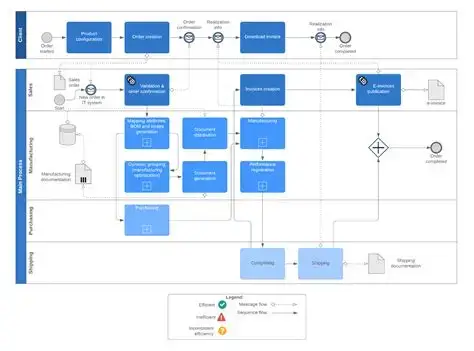
Why Automation Matters More as You Scale
As your business grows, complexity grows with it:
- more customers
- more tasks
- more communication
- more follow‑ups
- more data
- more moving parts
Automation becomes your force multiplier.
It helps you:
- reduce manual work
- eliminate repetitive tasks
- increase consistency
- improve customer experience
- speed up operations
- reduce costs
- protect your team from burnout
Automation isn’t a luxury — it’s a scaling requirement.
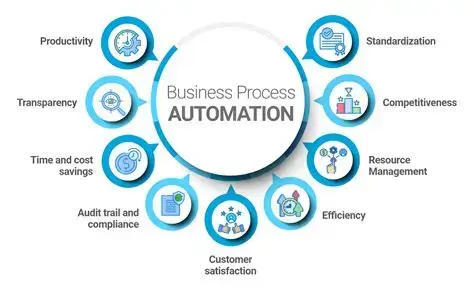
The Founder’s Automation Framework: The 4 Levels of Automation
Every scaling business moves through four levels of automation. Understanding these levels helps you automate the right things at the right time.
Level 1 — Task Automation (Start Here)
Automate simple, repetitive tasks.
Examples:
- reminders
- follow‑up emails
- invoice generation
- appointment scheduling
- data entry
Tools: Zapier, Make, HubSpot workflows, Shopify automations
Explore more: task automation basics
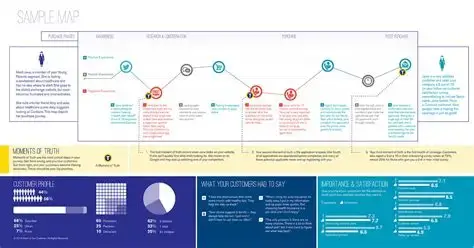
Level 2 — Process Automation
Automate multi‑step workflows.
Examples:
- onboarding sequences
- lead qualification
- customer follow‑up flows
- order fulfillment steps
- reporting cycles
This is where automation starts saving hours, not minutes.
Explore more: workflow automation
Level 3 — System Automation
Automate entire systems across multiple tools.
Examples:
- CRM ↔ email ↔ billing
- POS ↔ inventory ↔ accounting
- website ↔ CRM ↔ analytics
This creates a connected ecosystem instead of isolated tools.
Explore more: system integration
Level 4 — Intelligent Automation (AI‑Driven)
Automation that adapts, predicts, and optimizes.
Examples:
- AI customer support
- predictive analytics
- automated lead scoring
- AI‑powered reporting
- smart routing
This is the future of scaling.
Explore more: AI automation
What to Automate First (Founder‑Friendly Priority List)
Here’s the order founders should follow — based on impact and simplicity.
1. Repetitive Tasks
If it happens daily or weekly, automate it.
Examples:
- sending reminders
- updating spreadsheets
- tagging contacts
- generating invoices
2. Customer Communication
Consistency matters more than creativity.
Examples:
- welcome emails
- follow‑ups
- appointment confirmations
- feedback requests
3. Reporting & Dashboards
Manual reporting kills founder time.
Automate:
- KPI updates
- weekly summaries
- performance snapshots
Explore more: KPI dashboards
4. Lead Management
Speed = conversions.
Automate:
- lead scoring
- lead routing
- qualification
- follow‑up sequences
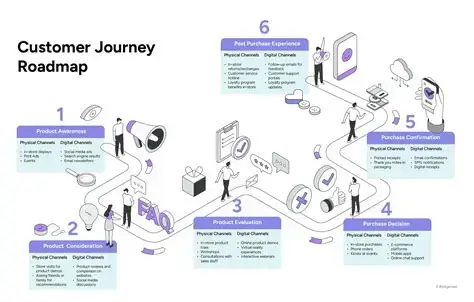
5. Operational Workflows
This is where scaling becomes smooth.
Automate:
- onboarding
- fulfillment
- task assignment
- approvals
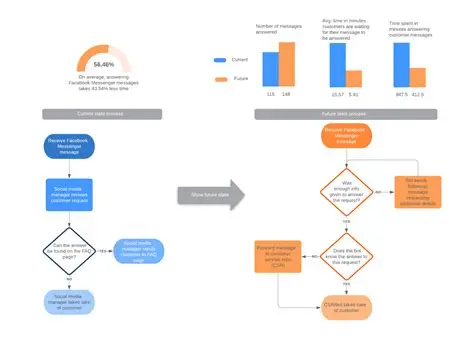
When to Automate (The Founder’s Rule of 3)
Automate a task when it meets any of these criteria:
1. It’s repeated 3+ times per week
Repetition = automation opportunity.
2. It takes more than 3 minutes
Small tasks add up fast.
3. It involves 3+ steps
Multi‑step processes create errors.
If a task hits all three? Automate it immediately.
Explore more: automation decision framework
How to Automate (Without Breaking Anything)
Here’s the founder‑friendly automation process:
Step 1 — Map the Process
Write out the steps. Keep it simple.
Step 2 — Identify the Trigger
What starts the automation?
Examples:
- new lead
- new purchase
- new task
- new form submission
Step 3 — Choose the Tools
Pick tools that integrate easily.
Step 4 — Build the Automation
Start small. Test often.
Step 5 — Monitor & Improve
Automation is never “set it and forget it.”
Explore more: building systems that scale
Real‑World Examples of Automation for Scale
Example 1: The Retail Brand That Automated Inventory
Result: 22 hours saved per month + fewer stockouts.
Example 2: The Agency That Automated Reporting
Result: founder regained 8 hours per week.
Example 3: The SaaS Startup That Automated Onboarding
Result: customer activation increased 40%.
Explore more: scaling case studies
Frequently Asked Questions
What is business automation?
Business automation uses tools and workflows to reduce manual work, increase efficiency, and improve consistency across operations.
What should I automate first?
Start with repetitive tasks, customer communication, reporting, and lead management. These deliver fast wins and reduce founder workload.
How do I know when to automate a task?
Use the Rule of 3: automate tasks repeated 3+ times per week, taking more than 3 minutes, or involving 3+ steps.
What tools help with automation?
Tools like Zapier, Make, HubSpot workflows, Shopify automations, and CRM integrations help automate tasks and processes.
Can automation replace employees?
No. Automation supports employees by removing repetitive work, reducing errors, and freeing time for higher-value tasks.
What is intelligent automation?
Intelligent automation uses AI to predict, optimize, and adapt workflows. Examples include AI customer support, predictive analytics, and automated lead scoring.
Final Thought: Automation Creates Capacity
Automation doesn’t replace your team — it empowers your team.
Automation doesn’t replace leadership — it supports leadership.
Automation doesn’t replace strategy — it enables strategy.
Scaling isn’t about doing more. It’s about doing less, better.
Automation gives founders the one resource they can never get back: time.
A deep dive by Kelvin Williams
A blog post by Kelvin—highly skilled, well-traveled, educated, experienced, and professional. Bring a lot to the table—technical, administrative, and know-how
A detail and results-oriented marketing strategist and business analyst based in Canada. With a sharp eye for market trends and a passion for unlocking business potential, I specialize in crafting data-backed strategies that drive measurable growth. Whether it’s optimizing campaigns, analyzing performance metrics, or identifying untapped opportunities, I bring clarity and impact to every project.
You can so reach us on platforms like Pinterest, Quora , Medium and Tumblr
The post Automation for Scale: What to Automate, When, and How appeared first on Engineered Growth: The Business Architecture That Guarantees Scalability and Market Dominance..
via Engineered Growth: The Business Architecture That Guarantees Scalability and Market Dominance. https://thebusinessarchitectfirm.com/automation-for-scale-what-to-automate/



No comments:
New comments are not allowed.