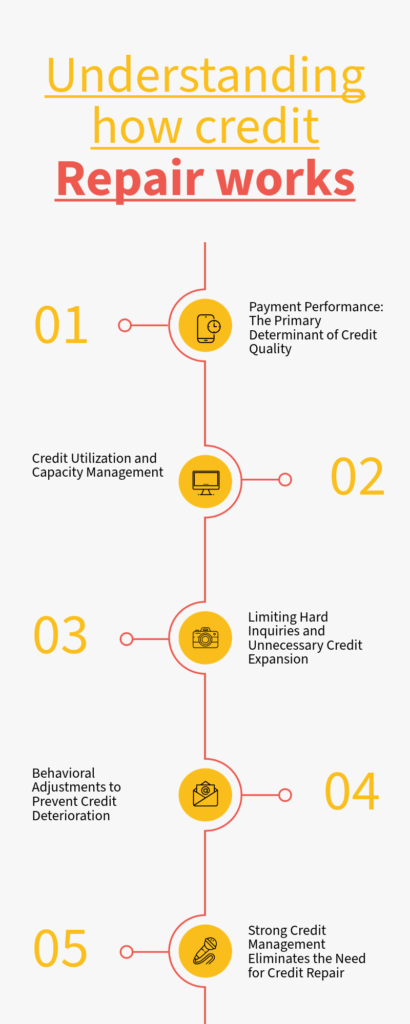
Transform Your Credit, Transform Your Life

Transform Your Credit, Transform Your Life: Professional credit repair in Canada. We remove negative items, dispute bureau errors, and rebuild your score — with results in 60–90 days. Book your free consultation today.


The Hidden Costs of Inefficiency: How Operational Leaks Kill Scaling Potential

Signs Your Business Needs Efficiency – A Diagnostic Guide for Founders Who Want to Stop Losing Money, Time, and Momentum

Inefficiency.

Not dramatic inefficiency. Not catastrophic inefficiency. But small, quiet, everyday inefficiency — the kind that hides inside workflows, habits, tools, communication, and decisions.

These operational leaks drain money, time, energy, morale, and momentum. And because they’re subtle, founders often don’t notice them until they’re already slowing growth.

This article exposes the hidden costs of inefficiency, shows how they sabotage scaling, and gives founders a diagnostic framework to identify and eliminate them.

If you want your business to scale, you must stop the leaks first.

The Founder Blind Spot: “We’re Busy, So We’re Fine.”

Busy does not mean efficient. Busy does not mean productive. Busy does not mean scalable.

Many founders mistake activity for progress. But inefficiency often hides inside busyness:

  • Repeating tasks manually
  • Fixing preventable mistakes
  • Answering the same questions
  • Re‑doing work
  • Searching for information
  • Managing chaos instead of systems

This is not growth. This is operational drag.

And drag kills scaling potential.

How to improve business efficiency
How to Identify and Fix Inefficient Business Processes

The 5 Hidden Costs of Inefficiency (That Most Founders Underestimate)

These costs don’t show up on a balance sheet — but they absolutely show up in your growth trajectory.

1. The Time Cost: Hours Lost to Repetition and Chaos | How to Improve Business Efficiency

Time is your most valuable scaling resource. Inefficiency steals it quietly.

Examples:

  • Manually scheduling appointments
  • Re‑entering data
  • Searching for files
  • Repeating onboarding steps
  • Fixing errors caused by unclear processes
  • Answering the same customer questions

If your team loses 10 minutes to inefficiency per hour, that’s 16.6% of payroll wasted.

Multiply that across:

  • 5 employees
  • 40 hours per week
  • 52 weeks per year

You’re losing hundreds of hours — and thousands of dollars — to inefficiency.

2. The Money Cost: Hidden Expenses That Add Up Fast

Inefficiency creates direct financial losses:

  • Overtime
  • Refunds
  • Rework
  • Delays
  • Missed opportunities
  • Poor inventory management
  • Low retention
  • High acquisition costs

Example: If your team spends 20% of their time fixing preventable mistakes, you’re effectively paying 20% more in payroll than necessary.

That’s not a small leak — that’s a hole in the boat.

3. The Customer Cost: Inconsistency Damages Trust | How to Improve Business Efficiency

Customers don’t care how busy you are. They care how consistent you are.

Inefficiency leads to:

  • Slow responses
  • Missed deadlines
  • Confusing communication
  • Inconsistent delivery
  • Lower quality
  • More complaints
  • Higher churn

Every inconsistency erodes trust. Every erosion reduces lifetime value. Every reduction hurts scaling.

4. The Team Cost: Burnout, Frustration, and Turnover

Inefficiency doesn’t just drain time — it drains morale.

Symptoms:

  • Constant firefighting
  • Confusion about responsibilities
  • Repeating tasks
  • Lack of clarity
  • Feeling unsupported
  • Working harder instead of smarter

Burnout leads to turnover. Turnover leads to instability. Instability kills scaling.

5. The Opportunity Cost: Growth You Never See

This is the most dangerous cost of all.

Inefficiency prevents:

  • New product launches
  • Market expansion
  • Strategic partnerships
  • Innovation
  • Scaling initiatives
  • Leadership development
  • Founder freedom

When inefficiency consumes your time, you lose the ability to pursue growth.

You don’t just lose money — you lose potential.

The 7 Operational Leaks That Kill Scaling Potential

These are the most common inefficiencies found in small and growing businesses.

1. Undefined Processes | How to Improve Business Efficiency

If your team doesn’t know the “right way” to do something, they’ll all do it differently — and inconsistently.

2. Manual Work That Should Be Automated

If you’re doing repetitive tasks manually, you’re wasting time and limiting capacity.

3. Poor Communication Channels

If communication is scattered across email, text, WhatsApp, and random conversations, inefficiency is guaranteed.

4. Lack of Documentation

If knowledge lives in people’s heads instead of systems, your business is fragile.

5. Unclear Roles and Responsibilities

If people don’t know who owns what, tasks fall through the cracks.

6. Inefficient Tools or Too Many Tools

If your tech stack is messy, disconnected, or overly complex, you lose time switching between systems.

7. Founder Dependency

If the founder is the bottleneck, the business cannot scale — period.

The Diagnostic: How to Identify Operational Leaks

Here’s a simple founder‑friendly diagnostic you can run today.

Ask yourself:

A. What tasks do we repeat every week?

Repetition = automation opportunity.

B. Where do mistakes happen most often?

Mistakes = process gaps.

C. What slows the team down?

Slowdowns = workflow inefficiency.

D. What do customers complain about?

Complaints = experience inconsistency.

E. What tasks depend on the founder?

Dependency = scaling risk.

F. What feels chaotic?

Chaos = lack of documentation.

G. What takes longer than it should?

Delays = operational drag.

If you identify more than three leaks, scaling will magnify them.

How to Fix Inefficiency (Without Overhauling Everything)

Founders often think fixing inefficiency requires massive restructuring. It doesn’t.

Here’s the simple path.

Step 1 — Document the Most Repetitive Process | How to Improve Business Efficiency

Start with onboarding, delivery, or support.

Step 2 — Create a Minimum Viable SOP

Keep it simple and actionable.

Step 3 — Automate One Repetitive Task

Scheduling, invoicing, follow‑ups — pick one.

Step 4 — Clean Up Communication Channels

One platform. One workflow. One source of truth.

Step 5 — Clarify Roles and Responsibilities

Define ownership for every major task.

Step 6 — Remove Founder Bottlenecks

Delegate or systemize anything that depends on you.

Step 7 — Review and Improve Monthly

Systems evolve — inefficiency returns if you don’t maintain discipline.

How to improve business efficiency
How to Identify and Fix Inefficient Business Processes

Real‑World Examples of Inefficiency Killing Scale

Fresh, founder‑friendly examples.

Example 1: The Cleaning Company Losing Hours to Manual Scheduling

They spent 8 hours weekly coordinating appointments. Automation saved those hours — and increased capacity by 3×.

Example 2: The Retail Boutique With No Inventory SOP

Stockouts and over‑ordering cost thousands monthly. Standardization fixed it — and enabled expansion.

Example 3: The Consultant Who Repeated Onboarding Manually

She wasted 10 hours weekly sending the same emails. Automation gave her those hours back — and doubled her client load.

Final Thought: Inefficiency Is the Silent Killer of Scale

Most businesses don’t fail because they lack opportunity. They fail because they leak capacity.

Scaling requires discipline. Discipline requires systems. Systems require standardization.

If you fix inefficiency, you unlock growth. If you ignore inefficiency, you block it.

Operational leaks kill scaling potential. Operational discipline creates it.

A deep dive by Kelvin Williams

A blog post by Kelvin—highly skilled, well-traveled, educated, experienced, and professional. Bring a lot to the table—technical, administrative, and know-how

A detail and results-oriented marketing strategist and business analyst based in Canada. With a sharp eye for market trends and a passion for unlocking business potential, I specialize in crafting data-backed strategies that drive measurable growth. Whether it’s optimizing campaigns, analyzing performance metrics, or identifying untapped opportunities, I bring clarity and impact to every project.

You can so reach us on platforms like PinterestQuora , Medium and Tumblr

The post The Hidden Costs of Inefficiency: How Operational Leaks Kill Scaling Potential appeared first on Engineered Growth: The Business Architecture That Guarantees Scalability and Market Dominance..


via Engineered Growth: The Business Architecture That Guarantees Scalability and Market Dominance. https://thebusinessarchitectfirm.com/how-to-improve-business-efficiency/

AI Search Engine Marketing (AI‑SEM): What Founders Need to Know in 2026

AI search has officially changed the game. Not “will change,” not “might change.” Has changed.

Across Google, ChatGPT Search, Perplexity, and Copilot, AI‑generated answers now sit above both organic results and paid ads — compressing clicks, reshaping visibility, and forcing marketers to rethink how search works.

Here’s the founder‑level breakdown.

1. AI Search Is Overtaking Traditional Search | AI Search Engine Marketing

Semrush’s 2025–2026 study found that AI search visitors will surpass traditional search visitors by 2028, and possibly sooner if Google fully rolls out “AI Mode.”

This shift is driven by:

  • AI Overviews replacing the top of Google’s SERP
  • ChatGPT Search becoming a standalone discovery engine
  • Perplexity and Copilot answering queries without sending traffic out

Meaning: Users increasingly get answers without clicking.

This is the rise of zero‑click search.

2. AI Overviews Reduce Both Organic and Paid Clicks | AI Search Engine Marketing

Data shows:

Why? AI answers compress the funnel by giving users everything upfront.

3. SEO and SEM Have Merged Into One Discipline | AI Search Engine Marketing

Clarity Digital’s 2026 analysis states that SEO and SEM are no longer separate — both now feed the same AI systems.

Why?

Because:

  • AI Overviews cite sources based on content quality signals
  • Paid platforms use AI bidding and AI‑generated creative
  • Landing page quality affects both organic visibility and paid quality scores

Meaning: You now run one unified search strategy, not two.

4. The New Goal: Be Cited in AI Answers (GEO)

Incremys’ 2026 guide explains the new dual‑visibility model:

This is called Generative Engine Optimization (GEO).

To win GEO, your content must be:

  • Factually precise
  • Structured
  • Evidence‑based
  • Entity‑rich
  • Semantically consistent

AI engines reward clarity, not keyword density.

5. AI Search Changes the Value of a Ranking | AI Search Engine Marketing

Even if you rank #1, AI may:

  • summarize your content
  • cite you without sending traffic
  • replace the need for a click entirely

Graphite + Similarweb’s dataset shows:

Ranking still matters — but differently.

Answer Engine Optimization

6. Paid Search Is Now AI‑Driven (Not Keyword‑Driven)

Google Ads and Microsoft Ads have shifted to:

  • Performance Max
  • Demand Gen
  • AI Max for Search
  • Broad match + smart bidding
  • Automatically created assets
  • Copilot‑assisted ad creation

Manual keyword control is fading. AI decides:

  • who sees your ad
  • when
  • with what creative
  • on which surface (including inside AI answers)

Your job is to feed the AI:

  • high‑quality landing pages
  • strong creative assets
  • clean conversion data
  • clear audience signals

This is the new SEM.

7. AI Search Real Estate Has Changed

DataFeedWatch found:

  • AI Overviews cover 50%+ of the screen in 84% of tested queries
  • Shopping ads appear above AI summaries in 81% of cases
  • Standard paid ads move unpredictably depending on query type

Meaning: The SERP layout is no longer stable — AI controls the top.

8. What Founders Must Do Now (Your Action Plan)

A. Optimize for AI Visibility (GEO)

To be cited in AI answers:

  • Write concise, structured content
  • Use clear entities (names, places, definitions)
  • Provide evidence and sources
  • Avoid fluff
  • Answer questions directly

B. Build “AI‑Ready” Landing Pages

AI systems evaluate:

  • clarity
  • expertise
  • originality
  • semantic consistency
  • user experience

C. Run Unified SEO + SEM Workflows

One strategy. One data layer. One content engine.

D. Track New KPIs

Old KPIs: clicks, impressions, rankings New KPIs:

  • AI citations
  • AI visibility share
  • generative answer presence
  • scroll depth
  • qualified traffic

E. Accept That Clicks Will Decline

But the clicks you do get will be:

  • more qualified
  • more ready to buy
  • more valuable

Google confirmed AI‑Overview clicks show longer time spent and higher intent.

AI Search Engine Marketing

9. The Founder Takeaway

AI search is not killing SEO or SEM. It’s reshaping them.

The winners will be founders who:

  • create structured, factual, expert content
  • optimize for AI citations
  • unify SEO + SEM
  • feed AI systems high‑quality signals
  • adapt faster than competitors

This is the new search landscape — and you’re early enough to dominate it.

A deep dive by Kelvin Williams

A blog post by Kelvin—highly skilled, well-traveled, educated, experienced, and professional. Bring a lot to the table—technical, administrative, and know-how

A detail and results-oriented marketing strategist and business analyst based in Canada. With a sharp eye for market trends and a passion for unlocking business potential, I specialize in crafting data-backed strategies that drive measurable growth. Whether it’s optimizing campaigns, analyzing performance metrics, or identifying untapped opportunities, I bring clarity and impact to every project.

You can so reach us on platforms like PinterestQuora , Medium and Tumblr

The post AI Search Engine Marketing (AI‑SEM): What Founders Need to Know in 2026 appeared first on Engineered Growth: The Business Architecture That Guarantees Scalability and Market Dominance..


via Engineered Growth: The Business Architecture That Guarantees Scalability and Market Dominance. https://thebusinessarchitectfirm.com/ai-search-engine-marketing-and-optimization/

Building Systems That Scale: The 7 Processes Every Business Must Standardize

Standard Operating Procedure | A Practical Guide to SOPs, Workflows, Automation, and Documentation for Growing Companies

Every founder wants a business that runs smoothly, grows predictably, and scales sustainably. But here’s the truth most entrepreneurs learn the hard way:

You cannot scale chaos. You can only scale systems.

Scaling isn’t about hiring more people, selling more products, or expanding into new markets. Scaling is about building a business that can handle more volume without breaking, slowing down, or relying on the founder’s constant involvement.

This article breaks down the 7 core processes every business must standardize before scaling — the operational backbone that transforms a growing business into a scalable one.

If you want your business to grow without burning out your team (or yourself), these are the processes you must lock in.

Why Standardization Is the Foundation of Scale | Standard Operating Procedure

Standardization creates:

  • Consistency
  • Predictability
  • Efficiency
  • Quality
  • Capacity
  • Scalability

When processes are documented, repeatable, and reliable, your business becomes easier to manage, easier to grow, and easier to delegate.

When processes are not standardized, your business becomes:

  • Founder‑dependent
  • Error‑prone
  • Stressful
  • Slow
  • Unpredictable
  • Impossible to scale

Standardization is not bureaucracy — it’s liberation.

The 7 Processes Every Business Must Standardize Before Scaling

These are the universal processes that apply to every industry, every business model, and every founder. If these seven are not standardized, scaling will magnify inefficiency instead of growth.

1. Customer Onboarding & First Impressions | Standard Operating Procedure

Why it matters: Onboarding sets the tone for the entire customer relationship. If it’s inconsistent, confusing, or slow, customers lose confidence immediately.

Standardize:

  • Welcome messages
  • Setup instructions
  • First‑week communication
  • Resource delivery
  • Expectations and timelines
  • Orientation or kickoff calls

Impact: A smooth onboarding process increases retention, reduces support tickets, and creates a professional, scalable customer experience.

Standard Operating Procedure
What does operations management do?

2. Service Delivery or Product Fulfillment

Why it matters: This is the core of your business. If delivery is inconsistent, scaling will break it instantly.

Standardize:

  • Step‑by‑step workflows
  • Quality checks
  • Handoffs between team members
  • Delivery timelines
  • Packaging or presentation
  • Customer communication

Impact: You eliminate errors, reduce delays, and ensure every customer receives the same high‑quality experience.

3. Sales & Lead Management | Standard Operating Procedure

Why it matters: Scaling requires predictable revenue — and predictable revenue requires a standardized sales process.

Standardize:

  • Lead qualification
  • Sales scripts or frameworks
  • Follow‑up sequences
  • Proposal templates
  • CRM usage
  • Closing procedures

Impact: Your sales process becomes repeatable, measurable, and scalable — not dependent on founder charisma or improvisation.

4. Marketing & Content Production | Standard Operating Procedure

Why it matters: Marketing chaos leads to inconsistent results. Scaling requires consistent messaging, consistent output, and consistent systems.

Standardize:

  • Weekly content workflows
  • Monthly campaigns
  • Brand voice guidelines
  • Posting schedules
  • Email templates
  • Creative approval processes

Impact: Your marketing becomes predictable, efficient, and easier to delegate — instead of random bursts of activity.

5. Customer Support & Issue Resolution

Why it matters: Support volume increases as you scale. Without standardized processes, support becomes overwhelming and inconsistent.

Standardize:

  • Ticket triage
  • Response templates
  • Escalation paths
  • FAQ documentation
  • Refund or resolution policies
  • Follow‑up procedures

Impact: Support becomes faster, smoother, and more professional — even as customer volume grows.

6. Internal Operations & Team Workflows

Why it matters: Scaling requires internal clarity. If your team doesn’t know how work flows, scaling will create confusion and bottlenecks.

Standardize:

  • Task assignment
  • Project workflows
  • Communication channels
  • Meeting rhythms
  • File organization
  • Approval processes

Impact: Your team becomes aligned, efficient, and capable of handling more complexity without chaos.

7. Finance, Billing & Cash Flow Management

Why it matters: Scaling increases financial complexity. Without standardized financial processes, cash flow becomes unpredictable — and unpredictable cash flow kills growth.

Standardize:

  • Invoicing
  • Payment collection
  • Expense tracking
  • Budgeting
  • Financial reporting
  • Profit allocation

Impact: You gain financial clarity, stability, and confidence — essential for scaling responsibly.

The Capital Architect’s Guide: Choosing the Right Business Loan Before the Wrong One Costs You Everything thebusinessarchitectfirm.com/small-busine…

The Business Architect Firm (@business-architect.bsky.social) 2026-06-26T19:54:38.012Z

The Founder Mistake: Standardizing Too Late

Most founders wait until:

  • They’re overwhelmed
  • Their team is confused
  • Customers complain
  • Quality drops
  • Growth stalls
  • Chaos becomes normal

Then they try to standardize.

But standardization is not a rescue mission — it’s a preparation step.

You standardize before scaling, not after.

Understanding Operations Management

How to Standardize Processes (Without Overcomplicating Anything)

Here’s a simple, founder‑friendly method.

Step 1 — Identify Your Repetitive Tasks

Anything done more than twice should be documented.

Step 2 — Write the “Minimum Viable SOP”

Keep it simple:

  • What is the task?
  • Who does it?
  • When is it done?
  • How is it done?
  • What tools are used?
  • What quality checks exist?

Step 3 — Turn SOPs Into Workflows

Use checklists, templates, or simple automation.

Step 4 — Train Your Team

Standardization only works if everyone follows it.

Step 5 — Improve Over Time

SOPs evolve as your business evolves.

Real‑World Examples of Standardization That Enabled Scale

Fresh, founder‑friendly examples.

Example 1: The Home‑Services Company That Standardized Delivery

A home‑services company documented every step of their service workflow. Result: Technicians delivered consistent quality, and weekly job capacity doubled.

Example 2: The Retail Boutique That Standardized Inventory Management

A boutique created SOPs for ordering, stocking, and merchandising. Result: Stockouts dropped, sales increased, and expansion became possible.

Example 3: The Consultant Who Standardized Onboarding

A consultant built a repeatable onboarding sequence. Result: Clients received a polished experience, and she saved 10 hours per week.

Final Thought: Systems Don’t Slow You Down — They Set You Free

Founders often resist standardization because it feels restrictive. But in reality, systems create freedom.

Freedom from:

  • Repetition
  • Chaos
  • Bottlenecks
  • Founder dependency
  • Stress
  • Inconsistency

When your business is built on standardized processes, scaling becomes not just possible — but predictable.

Systems are the backbone of sustainable growth. And these seven processes are where every founder must start.

A deep dive by Kelvin Williams

A blog post by Kelvin—highly skilled, well-traveled, educated, experienced, and professional. Bring a lot to the table—technical, administrative, and know-how

A detail and results-oriented marketing strategist and business analyst based in Canada. With a sharp eye for market trends and a passion for unlocking business potential, I specialize in crafting data-backed strategies that drive measurable growth. Whether it’s optimizing campaigns, analyzing performance metrics, or identifying untapped opportunities, I bring clarity and impact to every project.

You can so reach us on platforms like PinterestQuora , Medium and Tumblr

The post Building Systems That Scale: The 7 Processes Every Business Must Standardize appeared first on Engineered Growth: The Business Architecture That Guarantees Scalability and Market Dominance..


via Engineered Growth: The Business Architecture That Guarantees Scalability and Market Dominance. https://thebusinessarchitectfirm.com/standard-operating-procedure/

Automation for Founders: What to Automate First (And What to Avoid)

Founder Automation | A Practical Automation Roadmap for Non‑Technical Founders Who Want Smarter, Scalable Operations

Automation is one of the most powerful scaling tools available to founders — and one of the most misunderstood. Many think automation requires coding skills, expensive software, or a full‑time tech team. In reality, automation is simply the act of replacing repetitive manual work with systems that run reliably, consistently, and affordably.

Done right, automation increases capacity, reduces errors, improves customer experience, and frees founders from the endless cycle of “doing everything manually.” Done wrong, automation becomes a source of complexity, frustration, and wasted money.

This article breaks down exactly what founders should automate first, what to avoid, and how to build an automation roadmap that supports sustainable scale — without requiring technical expertise or big budgets.

Why Automation Matters for Scaling | Founder Automation

Automation isn’t about replacing people. It’s about replacing inefficiency.

When founders automate the right things, they unlock:

  • More time
  • More capacity
  • More consistency
  • More accuracy
  • More customer satisfaction
  • More scalability

Automation is the bridge between “I’m drowning in tasks” and “My business runs smoothly without me.”

If scaling is the destination, automation is the vehicle.

The Founder Problem: Doing Everything Manually

Most founders start their business doing everything themselves:

This is normal — but it becomes a bottleneck as the business grows.

Automation solves this by creating systems that work even when the founder isn’t working.

Founder Automation
Business Automation

The Automation Rule: Automate What’s Repetitive, Not What’s Strategic | Founder Automation

Before diving into specifics, here’s the golden rule:

Automate repetitive tasks. Do not automate strategic decisions.

Automation should handle:

  • Routine
  • Repetition
  • Predictable workflows
  • Data entry
  • Notifications
  • Scheduling
  • Follow‑ups

Automation should NOT handle:

  • Pricing strategy
  • Hiring decisions
  • Customer relationships
  • Creative work
  • Leadership
  • Quality control judgment

Automation supports scale — it does not replace leadership.

What Founders Should Automate First (The High‑Impact List) | Founder Automation

These are the tasks that deliver the biggest return on automation with the least complexity. They’re universal across industries and ideal for non‑technical founders.

1. Scheduling and Appointments

Why automate: Manual scheduling wastes time, creates errors, and leads to back‑and‑forth emails.

Automate:

  • Customer bookings
  • Team scheduling
  • Calendar syncing
  • Reminders
  • Rescheduling

Impact: Frees hours weekly and eliminates scheduling chaos.

2. Invoicing, Payments, and Receipts

Why automate: Manual invoicing is slow, inconsistent, and prone to mistakes.

Automate:

  • Invoice creation
  • Payment reminders
  • Receipts
  • Recurring billing
  • Failed payment alerts

Impact: Improves cash flow and reduces admin work.

3. Customer Follow‑Ups and Nurturing

Why automate: Founders often forget follow‑ups — automation ensures consistency.

Automate:

  • Lead nurturing emails
  • Post‑purchase follow‑ups
  • Review requests
  • Re‑engagement campaigns
  • Abandoned cart messages

Impact: Boosts retention and increases revenue without extra effort.

4. Onboarding and Welcome Sequences

Why automate: Onboarding sets the tone for customer experience.

Automate:

  • Welcome emails
  • Intro videos
  • Setup instructions
  • Resource delivery
  • First‑week check‑ins

Impact: Creates a polished, scalable customer experience.

Productivity AccelerationWhen a new hire spends their first two weeks hunting for answers, waiting for system access, and unclear on priorities, the organization is paying full-time wages for below-capacity output. #EmployeeOnboardingBestPracticesthebusinessarchitectfirm.com/from-first-i…

The Business Architect Firm (@business-architect.bsky.social) 2026-06-12T20:59:43.731Z

5. Task and Workflow Management | Founder Automation

Why automate: Founders lose time assigning tasks manually.

Automate:

  • Task creation
  • Status updates
  • Notifications
  • Approvals
  • Recurring tasks

Impact: Keeps operations organized and reduces oversight workload.

6. Inventory and Stock Alerts

Why automate: Manual inventory tracking leads to stockouts and over‑ordering.

Automate:

  • Low‑stock alerts
  • Reorder triggers
  • Inventory syncing
  • Supplier notifications

Impact: Prevents costly inventory mistakes.

7. Customer Support Triage

Why automate: Support volume increases as you scale — automation absorbs the load.

Automate:

  • FAQ chatbots
  • Ticket routing
  • Auto‑responses
  • Priority tagging
  • Knowledge base suggestions

Impact: Reduces support workload and improves response times.

8. Reporting and Analytics

Why automate: Manual reporting is slow and often inaccurate.

Automate:

  • Weekly dashboards
  • KPI summaries
  • Sales reports
  • Customer behaviour insights
  • Financial snapshots

Impact: Gives founders real‑time visibility without manual effort.

Founder Automation
Business Automation

What Founders Should NOT Automate (Avoid These Traps) | Founder Automation

Automation is powerful — but dangerous when misused. Here’s what founders should avoid automating.

1. Customer Relationships

Automation can support communication, but it cannot replace genuine human connection.

Avoid automating:

  • Personalized outreach
  • High‑value client communication
  • Conflict resolution
  • Relationship building

2. Creative Work

Automation cannot:

  • Write your brand story
  • Design your product vision
  • Create your strategy
  • Build your culture

Creativity is human — keep it that way.

3. Leadership and Decision‑Making

Automation should never:

  • Make hiring decisions
  • Approve budgets
  • Set pricing
  • Determine strategy

These require judgment, context, and experience.

4. Complex Problem‑Solving

Automation handles predictable tasks — not nuanced issues.

Avoid automating:

  • Custom solutions
  • Technical troubleshooting
  • High‑stakes decisions

5. Anything You Haven’t Documented Yet

If you automate a broken process, you scale the brokenness.

Document first. Automate second.

Founder Automation
Business Automation

The Founder Automation Roadmap (Simple, Practical, Effective) | Founder Automation

Here’s a step‑by‑step roadmap founders can follow.

Step 1 — Identify Repetitive Tasks

List everything you do weekly or daily.

Step 2 — Categorize by Impact

High‑impact tasks get automated first.

Step 3 — Document the Process

Write down how the task works manually.

Step 4 — Choose Simple Tools

Pick tools that are:

  • Affordable
  • Easy to use
  • Easy to integrate
  • Easy to maintain

Step 5 — Automate One Thing at a Time

Avoid automating everything at once.

Step 6 — Test and Refine

Automation improves with iteration.

Step 7 — Scale the Automation

Once stable, expand it across the business.

Real‑World Examples of Smart Founder Automation

Here are fresh examples that show automation in action.

Example 1: The Cleaning Company That Automated Scheduling

A cleaning service automated bookings, reminders, and follow‑ups. Result: They increased weekly job capacity by 3× without hiring.

Example 2: The Retail Boutique That Automated Inventory Alerts

A boutique set up low‑stock alerts and reorder triggers. Result: They eliminated stockouts and improved cash flow.

Example 3: The Consultant Who Automated Onboarding

A consultant created automated onboarding sequences. Result: Clients received a polished experience — and she saved 10 hours per week.

Final Thought: Automation Isn’t Technical — It’s Strategic

Founders don’t need coding skills to automate. They need clarity.

Automation is not about replacing people. It’s about replacing inefficiency.

When founders automate the right things — and avoid automating the wrong ones — they unlock capacity, consistency, and scalability.

Automation is the quiet engine behind sustainable growth. And for founders who want to scale intentionally, it’s one of the smartest investments they can make.

A deep dive by Kelvin Williams

A blog post by Kelvin—highly skilled, well-traveled, educated, experienced, and professional. Bring a lot to the table—technical, administrative, and know-how

A detail and results-oriented marketing strategist and business analyst based in Canada. With a sharp eye for market trends and a passion for unlocking business potential, I specialize in crafting data-backed strategies that drive measurable growth. Whether it’s optimizing campaigns, analyzing performance metrics, or identifying untapped opportunities, I bring clarity and impact to every project.

You can so reach us on platforms like PinterestQuora , Medium and Tumblr

The post Automation for Founders: What to Automate First (And What to Avoid) appeared first on Engineered Growth: The Business Architecture That Guarantees Scalability and Market Dominance..


via Engineered Growth: The Business Architecture That Guarantees Scalability and Market Dominance. https://thebusinessarchitectfirm.com/founder-automation/

The Founder’s Mindset: How Your Thinking Must Evolve Before Your Business Can

A Strategic Guide to the Mental Shifts That Unlock Sustainable Scale

Every founder dreams of scaling — the moment the business grows beyond them, the systems hum, the team expands, and the company becomes something bigger than the person who started it. But here’s the truth most founders overlook:

Your business cannot scale until your mindset does.

Scaling isn’t just operational. It isn’t just financial. It isn’t just strategic.

Scaling is psychological.

The biggest bottleneck in most growing companies isn’t cash flow, infrastructure, or market demand — it’s the founder’s thinking. The habits, beliefs, fears, and decision‑making patterns that worked in the early days become liabilities as the business grows.

This article breaks down the essential mindset shifts founders must make before their business can scale — the internal evolution that unlocks external growth.

If you want your business to grow, your thinking must grow first.

Why Mindset Matters More Than Strategy | Founder Mindset

You can have:

  • A great product
  • A strong market
  • A loyal customer base
  • A solid team
  • A clear plan

But if your mindset is stuck in “early‑stage survival mode,” scaling will feel impossible.

Founders often say:

  • “I don’t have time to scale.”
  • “I’m too busy to delegate.”
  • “No one can do it as well as I can.”
  • “I’ll fix the systems later.”
  • “I’ll hire once revenue increases.”

These aren’t operational problems. They’re mindset problems.

Scaling requires founders to think differently — not just work differently.

Founder Mindset
Entrepreneurship

The 7 Mindset Shifts Every Founder Must Make Before Scaling

Let’s break down the mental evolution required to build a scalable business.

1. From “Doer” to “Designer”

Early on, founders do everything:

  • Sales
  • Marketing
  • Operations
  • Customer support
  • Product development
  • Accounting
  • Firefighting

But scaling requires a shift from doing the work to designing the work.

You must move from:

  • Completing tasks → Creating systems
  • Solving problems → Preventing problems
  • Being the engine → Building the engine

This is the moment you stop being the hardest worker in the business and start being the architect of the business.

2. From “Control” to “Trust” | Founder Mindset

Founders often struggle with letting go. It’s understandable — the business is your creation, your identity, your livelihood.

But scaling requires trust:

  • Trust in your team
  • Trust in your systems
  • Trust in your processes
  • Trust in your leaders
  • Trust in the structure you’ve built

Micromanagement is a growth killer. Delegation is a scaling accelerator.

The founder mindset must evolve from: “I need to control everything” → “I need to empower the right people.”

3. From “Speed” to “Stability”

Early‑stage founders prioritize speed:

  • Launch fast
  • Sell fast
  • Respond fast
  • Fix fast
  • Move fast

But scaling requires stability:

  • Stable processes
  • Stable quality
  • Stable delivery
  • Stable leadership
  • Stable finances

Speed builds momentum. Stability builds scale.

The founder mindset must shift from: “Move fast and figure it out later” → “Build stability so we can move faster.”

Entrepreneurship

4. From “Short‑Term Survival” to “Long‑Term Strategy”

In the early days, founders think in days and weeks:

  • How do we get more customers this month?
  • How do we pay bills this week?
  • How do we fix today’s problem?

But scaling requires thinking in months and years:

  • What systems do we need for next year?
  • What team do we need for the next stage?
  • What markets will we enter in 18 months?
  • What infrastructure will support 10x growth?

Short‑term thinking builds a business. Long‑term thinking scales it.

5. From “Founder Dependency” to “Founder Independence”

If your business depends on you for:

  • Decisions
  • Quality control
  • Customer relationships
  • Operations
  • Problem‑solving
  • Sales

Then your business cannot scale.

Scaling requires independence:

  • Independent teams
  • Independent systems
  • Independent decision‑making
  • Independent workflows

The founder mindset must evolve from: “I am the business” → “The business can operate without me.”

This is the hardest shift — but the most important.

6. From “Cost Avoidance” to “Smart Investment”

Early founders avoid costs:

  • Hiring
  • Tools
  • Infrastructure
  • Training
  • Automation

But scaling requires investment — not reckless spending, but strategic spending.

You must shift from: “How do I save money?” → “How do I invest money to increase capacity?”

Scaling is not free. But it is affordable when done intentionally.

Entrepreneurship

7. From “Perfection” to “Progress” | Founder Mindset

Perfection is the enemy of scale.

Founders often delay:

  • Documenting processes
  • Delegating tasks
  • Launching new offerings
  • Hiring leaders
  • Automating workflows

Because they want everything perfect.

But scaling requires progress:

  • Imperfect systems
  • Imperfect delegation
  • Imperfect automation
  • Imperfect processes

Progress creates momentum. Perfection creates paralysis.

The Psychological Barriers That Hold Founders Back | Founder Mindset

Scaling isn’t just strategic — it’s emotional.

Here are the most common psychological barriers founders face:

Fear of losing control

“What if someone messes up?”

Fear of increased responsibility

“What if scaling creates problems I can’t handle?”

Fear of financial risk

“What if I invest and it doesn’t pay off?”

Fear of identity loss

“What if I’m no longer needed?”

Fear of change

“What if scaling changes the business too much?”

These fears are normal — but they must be addressed before scaling.

How Founders Can Evolve Their Mindset | Founder Mindset

Here are practical ways founders can shift their thinking.

1. Document one process per week

This builds clarity and reduces dependency.

2. Delegate one task per week

Start small — build trust gradually.

3. Create a 12‑month scaling vision

Shift your thinking from short‑term to long‑term.

4. Build a leadership “bench”

Identify team members who can grow into bigger roles.

5. Invest in one automation tool

Experience the power of efficiency.

6. Schedule weekly “CEO time”

No tasks. No operations. Just strategy.

7. Track your founder bottlenecks

Identify where you slow the business down.

These small steps create massive mindset shifts.

Real‑World Examples of Founder Mindset Evolution | Founder Mindset

Here are fresh, relatable examples.

Example 1: The Café Owner Who Stopped Doing Everything

A café owner in Fredericton realized she was the bottleneck — she handled ordering, scheduling, marketing, and customer issues. She documented processes, delegated ordering, and hired a part‑time manager.

Result: She reduced her workload by 40% and opened a second location.

Example 2: The Contractor Who Shifted From Worker to Leader

A contractor in Saint John spent years doing all the work himself. He shifted his mindset, hired two technicians, and focused on sales and operations.

Result: Revenue tripled — without increasing his personal workload.

Example 3: The Online Coach Who Stopped Chasing Perfection

A business coach in Halifax delayed launching her membership program for months. When she embraced “progress over perfection,” she launched with a simple MVP.

Result: She built recurring revenue and scaled her business model.

Final Thought: Your Business Can’t Scale Until You Do | Founder Mindset

Scaling isn’t just about systems, strategy, or infrastructure. It’s about mindset.

Your business will only grow as far as your thinking allows.

When founders evolve from:

  • Doer → Designer
  • Controller → Leader
  • Short‑term thinker → Long‑term strategist
  • Operator → Architect

Scaling becomes not just possible — but inevitable.

Your business is ready for the next level. Now it’s time for your mindset to be ready too.

A deep dive by Kelvin Williams

A blog post by Kelvin—highly skilled, well-traveled, educated, experienced, and professional. Bring a lot to the table—technical, administrative, and know-how

A detail and results-oriented marketing strategist and business analyst based in Canada. With a sharp eye for market trends and a passion for unlocking business potential, I specialize in crafting data-backed strategies that drive measurable growth. Whether it’s optimizing campaigns, analyzing performance metrics, or identifying untapped opportunities, I bring clarity and impact to every project.

You can so reach us on platforms like PinterestQuora , Medium and Tumblr

The post The Founder’s Mindset: How Your Thinking Must Evolve Before Your Business Can appeared first on Engineered Growth: The Business Architecture That Guarantees Scalability and Market Dominance..


via Engineered Growth: The Business Architecture That Guarantees Scalability and Market Dominance. https://thebusinessarchitectfirm.com/founder-mindset-guide/

Transform Your Credit, Transform Your Life

Transform Your Credit, Transform Your Life : Professional credit repair in Canada. We remove negative items, dispute bureau errors, and rebu...