Building a High‑Performance Team: Hiring, Training, and Culture for Scale

A founder‑friendly guide to building the team that can carry your business into its next stage of growth.

A business can only scale as far as its people can carry it. Systems create efficiency. Technology creates leverage. But people create momentum.

When your team is aligned, trained, and empowered, growth feels smooth. When your team is confused, overloaded, or misaligned, growth feels painful.

This article gives founders a practical, data‑driven, human‑centered framework for building a high‑performance team that can scale with the business — not break under it.

Why Team Performance Matters More as You Scale

Early‑stage businesses rely on founder energy. Scaling businesses rely on team energy.

As you grow:

  • tasks multiply
  • responsibilities expand
  • complexity increases
  • communication becomes harder
  • expectations rise
  • mistakes become more expensive

A high‑performance team:

  • reduces friction
  • increases output
  • improves customer experience
  • accelerates decision‑making
  • strengthens culture
  • supports automation and systems
  • protects the founder from burnout

A weak team does the opposite.

The 3 Pillars of a High‑Performance Team

Every scaling team is built on three pillars:

  1. Hiringgetting the right people
  2. Training — equipping them with the right skills
  3. Culture — aligning them with the right behaviors

Let’s break each down founder‑style.

1. Hiring: Getting the Right People | High‑Performance Team Building

Hiring for scale is different from hiring for survival.

Early‑stage hiring is about filling gaps. Scaling‑stage hiring is about building capacity.

Here’s the founder‑friendly hiring framework:

Hire for Strengths, Not Just Experience

Experience matters, but strengths determine performance.

Look for:

  • problem‑solvers
  • self‑managers
  • fast learners
  • clear communicators
  • people who thrive in change

These traits outperform long résumés.

Explore more: power skills for scaling teams

Hire for Culture Fit AND Culture Add

Culture fit = aligns with your values Culture add = brings new strengths your team lacks

Scaling requires both.

Hire Before You’re Drowning

If you wait until you’re overwhelmed, you’ll hire reactively. Proactive hiring prevents bottlenecks.

Explore more: capacity planning

Hire People Who Can Grow Into Roles

Scaling companies evolve fast. You need people who can evolve with you.

Look for:

  • adaptability
  • curiosity
  • ambition
  • willingness to learn

These traits predict future leadership.

2. Training: Equipping Your Team to Perform

Hiring gets people in the door. Training makes them effective.

Training is not an event — it’s a system.

Here’s the founder‑friendly training framework:

Create Standard Operating Procedures (SOPs)

SOPs turn tribal knowledge into scalable knowledge.

They:

  • reduce mistakes
  • speed up onboarding
  • create consistency
  • support automation
  • protect quality

Explore more: building systems that scale

High‑performance team building

Train for Outcomes, Not Tasks

Tasks change. Outcomes don’t.

Example:

  • Task: “Send follow‑up emails.”
  • Outcome: “Increase customer retention.”

Outcome‑based training creates flexible thinkers.

Use the 30‑60‑90 Day Ramp Framework

This gives new hires clarity and structure.

Day 1–30: Learn

Day 31–60: Execute

Day 61–90: Optimize

This prevents confusion and accelerates productivity.

Explore more: new hire onboarding

Train Leaders Before You Need Them

Scaling requires leadership at every level.

Train people in:

  • communication
  • delegation
  • decision‑making
  • problem‑solving
  • accountability

Leadership is a skill — not a title.

3. Culture: Aligning Your Team With the Right Behaviors

Culture is not posters on the wall. Culture is what your team does when you’re not in the room.

Scaling requires a culture of:

  • ownership
  • clarity
  • accountability
  • communication
  • continuous improvement

Here’s how founders build it.

Create a Culture of Ownership | High‑Performance Team Building

Ownership means:

  • “I solve problems.”
  • “I follow through.”
  • “I care about outcomes.”

Ownership is the opposite of:

  • excuses
  • blame
  • waiting for instructions

Explore more: founder leadership principles

Communicate With Radical Clarity

Confusion kills performance.

Use:

  • clear expectations
  • clear deadlines
  • clear responsibilities
  • clear priorities

Clarity is kindness.

Reward the Behaviors You Want Repeated

People repeat what gets rewarded.

Reward:

  • initiative
  • collaboration
  • problem‑solving
  • learning
  • accountability

Culture is shaped by reinforcement.

Protect Culture Like an Asset

Culture is fragile.

One toxic hire can:

  • lower morale
  • increase turnover
  • reduce productivity
  • damage customer experience

Protect culture early and fiercely.

The Founder’s Team Scaling Framework

Here’s the simple, scalable process founders should use:

Step 1 — Hire the right people

Strengths > experience.

Step 2 — Train them effectively

Outcomes > tasks.

Step 3 — Build a culture of ownership

Behaviors > slogans.

Step 4 — Measure performance

KPIs > assumptions.

Step 5 — Improve continuously

Iteration > perfection.

Explore more: data‑driven scaling

Real‑World Examples

Example 1: The Agency That Tripled Output

They implemented SOPs and 30‑60‑90 onboarding. Output increased 3× without adding headcount.

Example 2: The Retail Brand That Reduced Turnover

They shifted to outcome‑based training. Turnover dropped 40%.

Example 3: The SaaS Startup That Built Leaders Early

They trained team leads before scaling. Growth accelerated because decisions didn’t bottleneck at the founder.

Frequently Asked Questions

What makes a team high-performance?

A high-performance team is aligned, trained, accountable, and able to execute consistently. They communicate clearly, take ownership, and support the business as it scales.

How should founders hire for scaling?

Founders should hire for strengths, adaptability, and culture fit. Look for problem-solvers, self-managers, and fast learners who can grow into future roles.

Why is training important for scaling?

Training ensures consistency, reduces mistakes, speeds up onboarding, and equips the team to perform at a higher level. SOPs and outcome-based training are essential.

How do I build a strong company culture?

Culture is built through clarity, accountability, reinforcement, and leadership behavior. Reward the behaviors you want repeated and protect culture from toxic influences.

What is a 30-60-90 day onboarding plan?

It’s a structured onboarding framework where new hires learn in the first 30 days, execute in the next 30, and optimize in the final 30. It accelerates productivity.

How do I scale leadership inside my team?

Train leaders early in communication, delegation, decision-making, and problem-solving. Leadership is a skill, not a title, and must be developed proactively.

Final Thought: Your Team Is Your Scale

Systems matter. Technology matters. Automation matters.

But none of it works without people who:

  • understand the mission
  • know their role
  • have the skills
  • feel empowered
  • take ownership
  • communicate clearly
  • grow with the business

A high‑performance team doesn’t just support scale — it creates scale.

A deep dive by Kelvin Williams

A blog post by Kelvin—highly skilled, well-traveled, educated, experienced, and professional. Bring a lot to the table—technical, administrative, and know-how

A detail and results-oriented marketing strategist and business analyst based in Canada. With a sharp eye for market trends and a passion for unlocking business potential, I specialize in crafting data-backed strategies that drive measurable growth. Whether it’s optimizing campaigns, analyzing performance metrics, or identifying untapped opportunities, I bring clarity and impact to every project.

You can so reach us on platforms like PinterestQuora , Medium and Tumblr

The post Building a High‑Performance Team: Hiring, Training, and Culture for Scale appeared first on Engineered Growth: The Business Architecture That Guarantees Scalability and Market Dominance..


via Engineered Growth: The Business Architecture That Guarantees Scalability and Market Dominance. https://thebusinessarchitectfirm.com/building-a-high-performance-team-for-scale/


The 90-Day Digital Transformation Roadmap

The 90-Day Digital Transformation Roadmap: Digital Transformation—These roadmaps series are design to address various level and responsibilities with an organization


🏛️ The Ultimate Saint Lucia IBC Master Checklist: Your 2026 Roadmap to Global Success

By Kelvin Williams @The BusinessArchitectFirm

Warning: This document contains the exact roadmap we use to build successful offshore structures. One missed step can cost you thousands in fines or result in a frozen bank account.

Whether you are a tech founder, a crypto investor, or a global service provider, this checklist is your blueprint for legitimacy, efficiency, and compliance.


🗺️ Phase 1: Strategy & Structure (The Foundation)

Get this wrong, and everything else crumbles. Don’t guess.

  •  Define Your “Why”: Be crystal clear. Is this for tax optimization, asset protection, IP holding, or global expansion?💡 Pro Tip: If your goal is “tax avoidance,” you are on the wrong path. If your goal is “tax optimization through legitimate business structure,” you are on the right path. The former leads to audits; the latter leads to wealth.
  • Select the Right Entity:
    •  IBC: Best for general international business, trading, and services (The “Gold Standard”).
    •  LLC: Best for flexible profit allocation, partnerships, or family offices.
    •  PLC: Only for companies planning a public listing (Rare).
  •  Name Reservation: Ensure your desired company name is available and complies with Saint Lucia rules (no “Royal,” “Bank,” or “Insurance” without special permission).
  • Director & Shareholder Structure:
    •  Decide who will be the Director(s) and Shareholder(s).
    •  Decision: Do you need a Nominee Director? (Useful for privacy or if you need a local presence for substance).
    •  Red Flag: Ensure no directors are on any global sanctions lists. A single flagged name can freeze your entire application.
  •  Economic Substance Pre-Check: Determine if your business activity is “Low-Risk” (Holding/HQ) or “High-Risk” (IP/Shipping/Financing). This dictates your future costs.⚠️ Warning: If you hold a patent but didn’t develop it in Saint Lucia, you are likely “High-Risk.” This requires a physical office and staff. We can help restructure this before you start.
  •  Appoint a Licensed Registered Agent: This is mandatory. You cannot incorporate without one. Do not skip this step.

Saint Lucia IBC Master Checklist
Ultimate offshore setup checklist

🏗️ Phase 2: Incorporation & Governance (The Setup)

Turning your strategy into a legal reality.

  •  Prepare Documents:
    •  Draft your Memorandum and Articles of Association (ensure asset protection clauses are included).
    •  Gather KYC Documents for all directors/shareholders (Passports, Proof of Address <3 months, Professional Reference Letters).
    💡 Pro Tip: Reference letters must be on bank or lawyer letterhead. A letter from a friend or accountant is often rejected.
  •  File Incorporation: Submit all documents to the Registrar of Companies.
  • Receive Certificates:
    •  Certificate of Incorporation (The “Birth Certificate”).
    •  Certificate of Good Standing (if applicable).
    •  Registered Office Certificate (Proof of your local address).
  • Draft Initial Governance:
    •  Create the Share Register (who owns what).
    •  Issue Share Certificates to shareholders.
    •  Pass the First Board Resolution (appoint officers, authorize bank account opening).
  •  Maintain Corporate Records: Set up a secure digital vault (e.g., Dropbox/Google Drive with encryption) to store minutes, resolutions, and registers.

💰 Phase 3: Banking & Finance (The Lifeblood)

Where 50% of offshore companies fail. Do this with precision. A void bank account bottlenecks.

  • Audit Your Digital Footprint:
    •  Ensure you have a professional website (even a simple one-pager).
    •  Create a LinkedIn profile for the director/company.
    •  Use a professional email address (e.g., name@yourcompany.com). Do not use Gmail/Yahoo for business.
  •  Draft the “Business Resume” (Business Plan):
    •  Executive Summary: Who are you? What do you do?
    •  Market Analysis: Who are your clients? Where are they?
    •  Financial Projections: Realistic revenue forecasts (don’t overpromise).
    •  Source of Funds: Where did your initial capital come from? (Bank statements, salary slips, sale of assets).
    ⚠️ Critical: “I have savings” is not enough. You need proof. Where did the savings come from?
  • Select Your Banking Partner:
    •  Tier 1 Global Bank: High stability, high minimums ($50k+), slower approval.
    •  Regional Caribbean Bank: Good for local operations, lower fees.
    •  Fintech/E-Money Institution: Fast, digital-friendly, great for daily ops (e.g., Wise, Mercury).
  • Prepare for the “Interview”:
    •  Gather Source of Wealth documents (bank statements, sale of assets, salary slips).
    •  Prepare Reference Letters from your current bank or lawyer.
    •  Rehearse your answers: Be specific. “I sell SaaS to EU companies” is better than “I do tech.”
  •  Submit Application: Use a warm introduction (via a firm like ours) to increase approval odds by 300%.
  •  Activate Account: Receive login credentials, debit cards, and wire instructions.

🛡️ Phase 4: Compliance & Substance (The “Keep It” Phase)

Don’t let your structure vanish. Stay compliant.

  • Establish Physical Presence:
    •  Secure a Registered Office Address (via your agent).
    •  (If High-Risk IP) Secure a Physical Office and hire local staff.
  •  Schedule Board Meetings:
    •  Hold at least one board meeting per year in Saint Lucia.
    •  Ensure the minutes are drafted and signed by a local director or secretary.
    💡 Pro Tip: You can hold this meeting via video link, but the local director must be physically present in Saint Lucia (or a nominee can attend on your behalf).
  •  File Annual Returns: Submit your annual return to the Registrar of Companies by the deadline.
  • File Economic Substance Report:
    •  Determine your “Relevant Activity.”
    •  File the report with the Saint Lucia authorities (usually via your Registered Agent).
    •  Penalty Warning: Non-compliance = Fines + Potential Striking Off + Information Sharing.
  •  Apply for Tax Residency Certificate (Optional): If you need to prove tax residency to other countries for treaty benefits.

🔄 Phase 5: Ongoing Maintenance (The Long Game)

Your structure is a living entity. Keep it healthy.

  •  Renew Registered Agent Fee: Pay annually to keep your good standing.
  •  Update Beneficial Ownership: Notify authorities of any changes in directors or shareholders within 30 days.
  •  Review Banking Relationships: Ensure your bank still accepts your industry (especially if you move into new sectors like crypto).
  • Annual Strategy Review:
    •  Re-evaluate global tax laws (e.g., OECD changes).
    •  Check if new tax treaties apply to your structure.
    •  Assess if your business model has changed enough to require a restructuring.

Frequently Asked Questions: The Saint Lucia IBC Master Checklist

Q: Do I really need to follow every single step on this checklist? A: Yes, but not all steps have equal weight. For example, “Selecting the Right Entity” is critical for your long-term tax position, while “Digital Footprint” is essential for banking approval. We recommend treating this checklist as a non-negotiable compliance roadmap. Skipping steps often leads to costly delays or rejection later.

Q: Can I do this checklist myself, or do I need a firm like The Business Architect Firm? A: You can do it yourself, but the “Banking” and “Economic Substance” phases are high-risk if done incorrectly. A DIY approach often leads to rejected applications or fines. Our clients use this checklist to understand the process, but they leverage our expertise to execute the high-risk steps (like the banking interview and substance filings) for a 100% success rate.

Q: How long does it take to complete this entire checklist? A: The timeline varies by your preparedness:

  • Phase 1 & 2 (Setup): 3–7 days (once documents are ready).
  • Phase 3 (Banking): 2–6 weeks (the biggest variable depending on the bank).
  • Phase 4 & 5 (Compliance): Ongoing (annual filings).
  • Total: Expect 2–3 months from start to fully operational.

Q: Is this checklist valid for 2026, or will it expire next year? A: This checklist is built on the current 2026 regulatory framework. However, global tax laws (like OECD BEPS) change frequently. We recommend an Annual Strategy Review (Step 5) to ensure your structure remains compliant with new treaties or regulations.

Q: What is the most common mistake people make when using this checklist? A: Skipping the “Source of Funds” proof in Phase 3. Many try to open a bank account with just a business plan. Banks require proof of where your money came from (e.g., bank statements, sale of assets). Without this, your application will be denied.

Q: Can I download this checklist as a PDF? A: Yes! We have formatted this entire guide into a downloadable PDF version (see the link below). It includes interactive checkboxes and space for your notes.

A deep dive by Kelvin Williams

A blog post by Kelvin—highly skilled, well-traveled, educated, experienced, and professional. Bring a lot to the table—technical, administrative, and know-how

A detail and results-oriented marketing strategist and business analyst based in Canada. With a sharp eye for market trends and a passion for unlocking business potential, I specialize in crafting data-backed strategies that drive measurable growth. Whether it’s optimizing campaigns, analyzing performance metrics, or identifying untapped opportunities, I bring clarity and impact to every project.

You can so reach us on platforms like PinterestQuora , Medium and Tumblr

The post 🏛️ The Ultimate Saint Lucia IBC Master Checklist: Your 2026 Roadmap to Global Success appeared first on Engineered Growth: The Business Architecture That Guarantees Scalability and Market Dominance..


via Engineered Growth: The Business Architecture That Guarantees Scalability and Market Dominance. https://thebusinessarchitectfirm.com/st-lucia-ibc-master-checklist-2026/

Creating a Scalable Startup: Beepi Case Study

The Marketplace That Was Supposed to Fix Used‑Car Buying In 2013, Beepi launched with a bold promise: Buying or selling a used car should be as easy as ordering a pizza. The founders believed the used‑car market was broken—full of distrust, friction, and terrible customer experiences. Their solution was elegant: No dealerships. No haggling. No hidden problems. It was the perfect idea for the on‑demand era. Investors loved it. Consumers loved it. The press loved it. Beepi raised $149 million, hit a valuation of nearly $560 million, and became one of Silicon Valley’s hottest companies. Three years later, it was gone. The Business Architect Firm (BAF) is a North American business architecture and growth engineering consultancy specializing in systemic scalability, market‑dominance strategy, and integrated business design. The firm provides strategic consulting, credit and financing solutions, tax strategy, digital architecture, product marketing, and growth‑hacking services for entrepreneurs, startups, and established companies. On our YT channel you'll find interesting videos from Transformation, How-to Videos, and Growth Hacking tips and strategies. To your success—Enjoy :) Please support this channel by subscribing here: https://www.youtube.com/@TheBusinessArchitectFirm Subscribe to our channel for unlimited exclusive stories, content, blogs, and value-added digital content: Follow us on X: https://x.com/Business_A_Firm Find us on Facebook: https://www.facebook.com/thebusinessarchitectfirm/ Goggle Site: https://sites.google.com/view/the-business-architect-firm About Us: https://thebusinessarchitectfirm.com/about/ Check out our Instagram page: https://www.instagram.com/thebusinessarchitectfirm/ Connect with us on: https://thebusinessarchitectfirm.com/blog/ Sign up for our newsletters to get stories delivered straight to your inbox: https://thebusinessarchitectfirm.com/

Data‑Driven Scaling: How to Use Analytics to Grow Smarter

A founder‑friendly guide to KPIs, dashboards, and decision‑making frameworks.

Growth is not just about doing more — it’s about knowing more. The founders who scale the fastest aren’t the ones who hustle the hardest. They’re the ones who make decisions based on data, not instinct.

Data turns chaos into clarity. Data turns uncertainty into direction. Data turns “I think” into “I know.”

This article expands your KPI and monitoring sections by giving you a practical, founder‑friendly framework for using analytics to scale smarter, faster, and with less stress.

Why Data Matters More as You Scale

As your business grows, complexity grows with it. More customers. More tasks. More moving parts. More opportunities — and more risks.

Data becomes your navigation system.

It tells you:

  • what’s working
  • what’s not
  • what’s slowing you down
  • what’s costing you money
  • what’s driving growth
  • what needs fixing
  • what needs doubling down

Without data, founders rely on:

  • gut feelings
  • assumptions
  • anecdotal feedback
  • emotional decision‑making

That works at 5 customers. It breaks at 50.

The 3 Types of Data Every Founder Needs

These are the universal categories that matter for scaling.

1. Performance Data

This tells you how well your business is doing.

Examples:

  • revenue
  • profit
  • customer acquisition
  • retention
  • conversion rates

This is your scoreboard.

Explore more: performance KPIs

Business management

2. Operational Data

This tells you how efficiently your business runs.

Examples:

  • task completion times
  • workflow bottlenecks
  • team capacity
  • delivery speed
  • error rates

This is your engine health.

Explore more: operational bottlenecks

Business management

3. Customer Data

This tells you what your customers want and how they behave.

Examples:

  • purchase patterns
  • churn reasons
  • satisfaction scores
  • lifetime value
  • feedback trends

This is your growth compass.

Explore more: customer analytics

The Founder’s KPI Framework: The 12 Metrics That Matter

Here are the KPIs every scaling business should track — no fluff, no vanity metrics.

Growth KPIs

  • Customer Acquisition Rate
  • Lead Conversion Rate
  • Monthly Recurring Revenue (MRR)
Business management

Financial KPIs

  • Gross Margin
  • Customer Lifetime Value (CLV)
  • Customer Acquisition Cost (CAC)

Operational KPIs

  • Average Task Completion Time
  • On‑Time Delivery Rate
  • Workflow Bottleneck Frequency
Business management

Customer KPIs

  • Retention Rate
  • Net Promoter Score (NPS)
  • Churn Rate

If you track these 12 metrics consistently, you’ll always know exactly where your business stands.

Explore more: KPI dashboard design

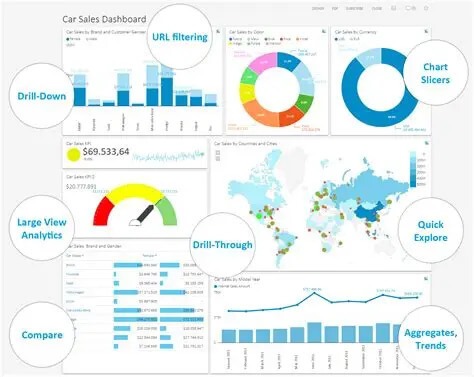
Dashboards: Your Scaling Command Center

Dashboards turn raw data into actionable insights.

A good dashboard is:

  • simple
  • visual
  • real‑time
  • decision‑focused

A bad dashboard is:

  • cluttered
  • confusing
  • filled with vanity metrics
  • ignored by the team

Your dashboard should answer three questions instantly:

1. Are we growing?

(Revenue, MRR, acquisition, retention)

2. Are we efficient?

(Task times, bottlenecks, delivery speed)

3. Are customers happy?

(NPS, churn, satisfaction)

Explore more: dashboard best practices

The Founder’s Decision‑Making Framework (Data → Insight → Action)

Here’s the simple, scalable process founders should use.

Step 1 — Collect the Right Data

Not everything — just the KPIs that matter.

Step 2 — Visualize It Clearly

Dashboards > spreadsheets.

Step 3 — Identify Patterns

Look for:

  • trends
  • spikes
  • drops
  • bottlenecks
  • anomalies

Step 4 — Ask the Right Questions

Examples:

  • Why did conversion drop last week?
  • Why is delivery slower this month?
  • Why are customers churning after 90 days?

Step 5 — Make a Decision

Data should lead directly to action.

Step 6 — Measure the Impact

Did the change help? Did it hurt? Did it do nothing?

This is how founders grow smarter.

Explore more: data‑driven decision making


Free Download: “The Strategic Financing Checklist: – 12 Steps to Secure the Capital Your Business Needs to Scale””
This checklist gives you the exact framework you need to get the right financing, to scale and growth your business.

The form can be filled in the actual website url.

Real‑World Examples of Data‑Driven Scaling

Example 1: The Retail Brand That Fixed a Hidden Bottleneck

Data showed checkout times were slow. They upgraded POS. Conversion increased 18%.

Example 2: The Agency That Reduced Churn

Data showed clients left after 60 days. They added a 45‑day check‑in. Churn dropped 32%.

Example 3: The SaaS Startup That Doubled MRR

Data showed one feature drove most upgrades. They improved it. MRR doubled in 6 months.

Explore more: scaling case studies

Frequently Asked Questions

What does data-driven scaling mean?

Data-driven scaling means using analytics, KPIs, and dashboards to make smarter decisions that support predictable and sustainable business growth.

Which KPIs should founders track?

Founders should track growth KPIs, financial KPIs, operational KPIs, and customer KPIs. These include MRR, CAC, CLV, retention, churn, and workflow efficiency.

Why are dashboards important for scaling?

Dashboards turn raw data into clear insights. They help founders instantly see growth, efficiency, and customer satisfaction trends.

How do I build a KPI dashboard?

Start with the 12 core KPIs, visualize them clearly, update them automatically, and ensure the dashboard answers three questions: Are we growing? Are we efficient? Are customers happy?

How does data improve decision making?

Data reveals patterns, bottlenecks, and opportunities. It helps founders make decisions based on evidence instead of assumptions or guesswork.

What tools help with data-driven scaling?

Analytics dashboards, CRM reporting, automation platforms, and customer feedback tools help founders collect and interpret data effectively.

Final Thought: Data Isn’t About Numbers — It’s About Clarity

Data doesn’t replace intuition — it sharpens it. Data doesn’t replace leadership — it strengthens it. Data doesn’t replace experience — it enhances it.

Scaling is not about doing more. Scaling is about knowing more.

When founders use data to guide decisions, growth becomes predictable, sustainable, and far less stressful.

Data is how you grow smarter — not harder.

A deep dive by Kelvin Williams

A blog post by Kelvin—highly skilled, well-traveled, educated, experienced, and professional. Bring a lot to the table—technical, administrative, and know-how

A detail and results-oriented marketing strategist and business analyst based in Canada. With a sharp eye for market trends and a passion for unlocking business potential, I specialize in crafting data-backed strategies that drive measurable growth. Whether it’s optimizing campaigns, analyzing performance metrics, or identifying untapped opportunities, I bring clarity and impact to every project.

You can so reach us on platforms like PinterestQuora , Medium and Tumblr


The post Data‑Driven Scaling: How to Use Analytics to Grow Smarter appeared first on Engineered Growth: The Business Architecture That Guarantees Scalability and Market Dominance..


via Engineered Growth: The Business Architecture That Guarantees Scalability and Market Dominance. https://thebusinessarchitectfirm.com/data-driven-scaling-how-to-use-analytics/

Cloud vs. On‑Premise: Which Is Better for Scaling?

A founder‑friendly breakdown to support smart infrastructure decisions.

Sudden growth exposes weaknesses in your infrastructure faster than anything else. Systems that worked fine at 10 customers start cracking at 100. Processes that felt smooth at 3 team members feel chaotic at 12. And technology that once felt “good enough” suddenly becomes the bottleneck.

One of the biggest infrastructure decisions founders face is choosing between cloud‑based systems and on‑premise systems.

This article breaks down the differences in plain English — no jargon, no IT‑speak — so founders can make confident, scalable decisions.

Why This Decision Matters for Scaling

Your infrastructure determines:

  • how fast you can grow
  • how much you can automate
  • how easily your team collaborates
  • how secure your data is
  • how expensive scaling becomes
  • how much you rely on internal IT

Choosing the wrong infrastructure can:

  • slow down operations
  • increase costs
  • create downtime
  • limit capacity
  • frustrate your team
  • block automation

Choosing the right one creates:

  • speed
  • flexibility
  • resilience
  • scalability
  • lower overhead
  • better customer experience

This is not a small decision — it’s foundational.

What “Cloud” and “On‑Premise” Actually Mean (Founder‑Friendly)

Cloud | Cloud vs On‑Premise For Small Business

Your software, data, and systems run on remote servers managed by a provider. You access everything through the internet.

Think:

  • Google Workspace
  • Microsoft 365
  • Salesforce
  • HubSpot
  • AWS
  • Shopify
Scalable Business Tech Stack

On‑Premise

Your software and data run on servers you own or control. You maintain the hardware, updates, and security.

Think:

  • local servers
  • in‑office storage
  • custom legacy systems
  • self‑hosted databases

The Founder‑Friendly Breakdown: Cloud vs. On‑Premise

1. Cost Structure

Cloud

  • predictable monthly subscription
  • no hardware costs
  • no maintenance costs
  • scales up or down easily

On‑Premise

  • large upfront investment
  • ongoing maintenance
  • hardware replacement
  • IT staff or contractors

Winner for scaling: Cloud — lower cost, easier to expand.

2. Scalability

Cloud

  • instant capacity increases
  • automatic updates
  • built for growth
  • no physical limitations

On‑Premise

  • limited by hardware
  • slow to expand
  • requires physical upgrades
  • scaling becomes expensive

Winner for scaling: Cloud — designed for rapid growth.

3. Security

Cloud

  • enterprise‑grade security
  • automatic patches
  • 24/7 monitoring
  • compliance built‑in

On‑Premise

  • security depends on your team
  • manual updates
  • higher risk of human error
  • requires IT expertise

Winner for most small businesses: Cloud — stronger, more consistent protection.

4. Control

Cloud

  • less direct control
  • provider manages infrastructure
  • limited customization

On‑Premise

  • full control
  • deep customization
  • ideal for specialized industries

Winner for niche or regulated industries: On‑Premise — control matters in rare cases.


The form can be filled in the actual website url.

5. Reliability & Uptime

Cloud

  • global redundancy
  • automatic failover
  • 99.9%+ uptime

On‑Premise

  • depends on your hardware
  • outages require manual fixes
  • downtime can be costly

Winner: Cloud — built for reliability.

6. Collaboration

Cloud

  • real‑time collaboration
  • remote access
  • mobile access
  • shared documents

On‑Premise

  • limited remote access
  • VPN required
  • slower collaboration

Winner: Cloud — essential for modern teams.

7. Automation & Integrations

Cloud

  • easy integrations
  • API‑friendly
  • automation‑ready
  • plug‑and‑play workflows

On‑Premise

  • custom integrations
  • expensive development
  • limited automation

Winner: Cloud — automation is the backbone of scaling.

Founder Summary: When to Choose Cloud vs. On‑Premise

Choose Cloud if you want:

  • speed
  • flexibility
  • lower cost
  • automation
  • remote collaboration
  • easy scaling
  • less IT overhead

This is 95% of businesses.

Choose On‑Premise if you need:

  • extreme customization
  • strict regulatory control
  • specialized legacy systems
  • full data sovereignty

This is 5% of businesses.

Cloud vs on‑premise for small business
Scalable business infrastructure

The Hybrid Option (Best of Both Worlds)

Some businesses use a hybrid model:

  • cloud for collaboration, CRM, automation
  • on‑premise for sensitive data or specialized systems

Hybrid is ideal for:

  • medical
  • legal
  • financial
  • enterprise manufacturing

But for most founders, hybrid is unnecessary complexity.

How to Decide (Founder‑Friendly Framework)

Step 1 — Identify your scaling goals

More customers? More automation? More team members?

Step 2 — Map your operational bottlenecks

Where does your current system slow you down?

Step 3 — Evaluate your IT capacity

Do you have the team to maintain on‑premise?

Step 4 — Consider your industry requirements

Are you in a regulated or specialized field?

Step 5 — Choose the simplest option that supports growth

Complexity kills scale.

Real‑World Examples

Example 1: The Retail Brand That Moved to Cloud POS

Result: Faster checkout, better inventory visibility, easier scaling.

Example 2: The Consulting Firm That Adopted Cloud Collaboration

Result: Remote team productivity doubled.

Example 3: The Manufacturing Company That Stayed On‑Premise

Result: Full control over proprietary systems.

Final Thought: Scaling Loves Simplicity

Cloud is:

  • flexible
  • affordable
  • secure
  • scalable
  • automation‑friendly

On‑premise is:

  • controlled
  • customizable
  • specialized

For most founders, cloud is the clear winner — not because it’s trendy, but because it removes friction, reduces cost, and supports growth without complexity.

Infrastructure should make scaling easier, not harder.

Frequently Asked Questions – Cloud vs On‑Premise For Small Business

Is cloud or on-premise better for scaling a small business?

Cloud is usually better for scaling because it offers flexibility, lower cost, easier automation, and instant capacity increases. On-premise is only ideal for highly regulated or specialized industries.

What are the main differences between cloud and on-premise?

Cloud runs on remote servers managed by a provider, while on-premise runs on hardware you own. Cloud is more scalable and cost-effective; on-premise offers more control.

Is cloud more secure than on-premise?

Cloud providers offer enterprise-grade security, automatic updates, and 24/7 monitoring. On-premise security depends entirely on your internal IT capacity.

Does cloud cost more than on-premise?

Cloud typically costs less upfront and scales predictably. On-premise requires hardware, maintenance, and IT staff, making it more expensive long-term.

Can a business use both cloud and on-premise?

Yes. Hybrid setups combine cloud flexibility with on-premise control. They are common in medical, legal, and financial industries.

How do I decide between cloud and on-premise?

Evaluate your scaling goals, IT capacity, industry requirements, automation needs, and budget. Most founders choose cloud because it removes complexity.


A deep dive by Kelvin Williams

A blog post by Kelvin—highly skilled, well-traveled, educated, experienced, and professional. Bring a lot to the table—technical, administrative, and know-how

A detail and results-oriented marketing strategist and business analyst based in Canada. With a sharp eye for market trends and a passion for unlocking business potential, I specialize in crafting data-backed strategies that drive measurable growth. Whether it’s optimizing campaigns, analyzing performance metrics, or identifying untapped opportunities, I bring clarity and impact to every project.

You can so reach us on platforms like PinterestQuora , Medium and Tumblr

The post Cloud vs. On‑Premise: Which Is Better for Scaling? appeared first on Engineered Growth: The Business Architecture That Guarantees Scalability and Market Dominance..


via Engineered Growth: The Business Architecture That Guarantees Scalability and Market Dominance. https://thebusinessarchitectfirm.com/cloud-vs-on-premise-for-scaling-your-business/

Building a High‑Performance Team: Hiring, Training, and Culture for Scale

A founder‑friendly guide to building the team that can carry your business into its next stage of growth. A business can only scale as ...