Economic Substance 101: What Saint Lucia IBC Owners Actually Need to Do (Without Renting a Palace)

By Kelvin – The Business Architect Firm

You’ve heard the term. Maybe a lawyer mentioned it. Maybe you saw a warning in the news: “New Substance Rules Coming to the Caribbean!”

It sounds scary. It sounds expensive. It sounds like you’re about to be forced to move your family to a tropical island just to keep your tax savings.

Let’s set the record straight immediately: Economic Substance does not mean you need to live in Saint Lucia. It does not mean you need to rent a $5,000/month office suite in Castries. And it definitely doesn’t mean your offshore structure is dead.

It means one thing: Your company must have a real, functional presence that matches its activities.

As a veteran who has navigated these regulations since their inception, I can tell you this: The goal isn’t to punish you. It’s to stop “brass plate” shells (companies that exist only on paper) from exploiting the system. If you are running a real business, the new rules are actually a badge of honor. They prove you are legitimate.

Let’s break down exactly what “Economic Substance” means for a Saint Lucia IBC in 2026, and how to stay compliant without breaking the bank.


The “Why” Behind the Rules: A Global Shift

Why is everyone talking about this now?

For decades, jurisdictions like Saint Lucia offered tax efficiency to attract global business. But the world changed. The OECD (Organization for Economic Cooperation and Development) and the EU launched a crackdown on “harmful tax practices.”

They introduced the BEPS (Base Erosion and Profit Shifting) framework. The core idea? Profits should be taxed where the economic activity happens.

If you are a holding company in Saint Lucia that owns a patent, the EU wants to know: Who is actually managing that patent? Where are the decisions being made?

If the answer is “Nobody, it’s just a shell,” you are in trouble. If the answer is “Our directors meet quarterly in Saint Lucia, we hire local legal counsel, and we manage the IP from here,” you are compliant.

The Veteran’s Take: This isn’t a barrier; it’s a filter. It separates the “tourists” (people trying to hide money) from the “architects” (people building real global businesses). We want to be architects.
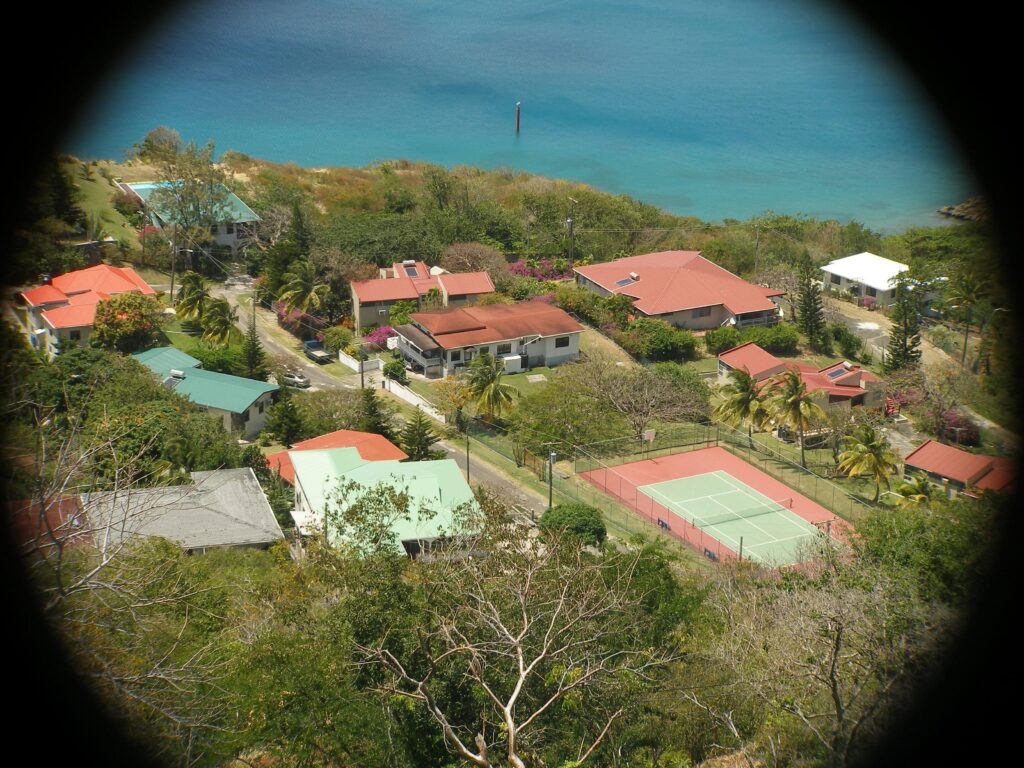

Saint Lucia IBC substance requirements
Registered agent substance

The “Relevant Activity” Test: Do You Need Substance?

Not every Saint Lucia IBC needs to prove economic substance. It depends on what your company does.

The law categorizes business activities into “Relevant Activities.” If your company falls into one of these categories, you must prove substance. If not, you are generally exempt (though you still need to file a report stating you are exempt).

The 9 Relevant Activities:

  1. Banking
  2. Insurance
  3. Fund Management
  4. Financing & Leasing
  5. Headquarters Business (Managing a group of companies)
  6. Shipping
  7. Holding Company Business (Just owning shares/IP)
  8. Distribution & Service Centers
  9. Intellectual Property (High-Risk IP)

The Good News: Most of our clients fall into Holding Company Business or Headquarters Business. These are the “low-risk” categories. They have the simplest substance requirements.

The Bad News: If you are doing “High-Risk IP” (like holding a patent for a drug you invented), the rules are much stricter. You need a physical office and employees in Saint Lucia.

The Fix: Most smart entrepreneurs structure their business to avoid “High-Risk IP” classification by ensuring the R&D and development happen elsewhere, while the holding happens in Saint Lucia. We handle this structuring for you.


The “Low-Risk” Substance Checklist: What You Actually Need to Do

If your IBC is a standard Holding Company or Headquarters entity, here is the realistic, manageable checklist for 2026.

1. Direction and Management

Your company must be directed and managed in Saint Lucia.

  • What this means: The Board of Directors must hold meetings in Saint Lucia.
  • The Reality: You don’t need to fly your whole team there. You can hold one or two strategic meetings per year in Saint Lucia.
  • The Pro Tip: We can arrange for a local director (a nominee) to attend these meetings with you, or we can facilitate a “hybrid” meeting where the local director is present in Castries while you join via video link. The key is that the decision-making happens on the island.

2. Core Income Generating Activities (CIGA)

You must perform the core activities of your business in Saint Lucia.

  • For a Holding Company: The core activity is “managing the holding of shares and IP.”
  • The Reality: This means your local registered agent or secretary handles the administrative work (filing annual returns, keeping minutes). You don’t need a full-time staff.
  • The Pro Tip: Your Registered Agent can often act as your “service provider” for these activities, fulfilling the requirement without you needing to hire a full team.

3. Physical Presence

You need a physical place of business.

  • What this means: A registered office address.
  • The Reality: A virtual office provided by your Registered Agent is usually sufficient. You do not need a staffed reception or a dedicated desk. Just a valid address where official mail can be delivered.

4. Employees and Expenditure

You need to have adequate employees and operating expenditures in Saint Lucia.

  • What this means: “Adequate” is relative to the size of your business.
  • The Reality: For a small holding company, this might mean paying the Registered Agent’s annual fee (which covers the local director and office). You don’t need to hire 10 people.
  • The Pro Tip: If you are a solo entrepreneur, your “expenditure” is the fee you pay to the firm managing your compliance. That counts!

The “High-Risk” Trap: What to Avoid

There is one area where you need to be extremely careful: Intellectual Property (IP).

If your company holds valuable IP (like a patent, trademark, or copyright) that generates significant income, and you didn’t develop that IP in Saint Lucia, you might be classified as a “High-Risk IP” entity.

  • The Consequence: You will be required to have a physical office and employees in Saint Lucia. This is expensive and often impractical for a solo entrepreneur.
  • The Solution: Structure your IP carefully. Often, the IP is held by a different entity (e.g., in the US or EU) where the R&D happened, and the Saint Lucia IBC simply licenses the IP or holds the shares of the operating company. This keeps you in the “low-risk” category.

The Veteran’s Warning: Do not try to “fake” this. The authorities are smart. If they see you holding a $10M patent but have no staff in Saint Lucia, they will reclassify you. Get the structure right from Day 1.


Tax Planning and Asset ProtectionSelecting the appropriate jurisdiction can significantly shape the trajectory of your business—consider leading global centers for offshore company formation.thebusinessarchitectfirm.com/category/tax…#IBC #OffshoreBanking #BVI #Seychelles #AssetProtection

The Business Architect Firm (@business-architect.bsky.social) 2026-08-02T14:12:27.704Z


How We Make It Easy: The “Compliance-as-a-Service” Model

You don’t need to become an expert in Saint Lucia law. You just need to focus on your business.

At The Business Architect Firm, we handle the substance requirements for you. Here’s how:

  1. Strategic Structuring: We design your company so it falls into the “low-risk” category from the start.
  2. Meeting Management: We organize your annual board meetings in Saint Lucia, provide the local director, and handle the minute-taking.
  3. Registered Agent Services: We provide the physical address and handle the core administrative activities.
  4. Annual Reporting: We prepare and file your Economic Substance Report with the Saint Lucia authorities.

The Result: You stay compliant, your tax benefits remain intact, and you don’t have to worry about a single form.


Final Thoughts: Substance is Your Friend

Don’t let the term “Economic Substance” scare you. It’s not a trap; it’s a standard of legitimacy.

By meeting these requirements, you are telling the world: “I am not hiding. I am running a real, transparent, and compliant business.” That is a powerful message for your clients, your partners, and your banks.

If you are unsure about your status or need help structuring your company to meet these rules, let’s talk. We’ve helped hundreds of clients navigate this exact path.

Ready to secure your compliance? Contact The Business Architect Firm for a confidential review of your structure.


📝 Quick Checklist: Are You Compliant?

  •  Check your activity: Are you a Holding Company, HQ, or High-Risk IP?
  •  Board Meetings: Have you scheduled your next meeting in Saint Lucia?
  •  Registered Agent: Do you have a valid address and local director?
  •  Annual Report: Have you filed your Economic Substance Report for the year?
  •  Structure Review: Did we check if your IP is classified as “High-Risk”?

Frequently Asked Questions: Economic Substance in Saint Lucia

Q: Do I actually need to live in Saint Lucia to meet “Economic Substance” requirements? A: No. You do not need to live there or even visit frequently. For most “low-risk” entities (like holding companies), you only need to hold your board meetings in Saint Lucia (which can be arranged via a local director or hybrid video link) and maintain a registered office address. Your daily operations can remain wherever you are.

Q: What happens if I fail to file my Economic Substance Report? A: The penalties are significant. The Saint Lucia authorities can impose fines, and in severe cases, they can strike your company off the register or share your non-compliance details with international tax authorities. This could jeopardize your tax residency status in your home country. Compliance is non-negotiable.

Q: I hold a patent for my software. Does that make me “High-Risk” IP? A: It depends. If you developed the software in Saint Lucia with local employees, you are likely compliant. If you developed it elsewhere and just “hold” the patent in Saint Lucia, you may be classified as “High-Risk IP,” which requires a physical office and local staff. We help structure your IP holdings to avoid this trap.

Q: Can my Registered Agent handle the “Board Meetings” for me? A: Yes. This is a common service. Our local partners can host your board meeting in Castries, act as the local director for the meeting, and ensure the minutes are legally drafted and filed. You can attend via video call, and the requirement is satisfied.

Q: How much does it cost to maintain Economic Substance? A: For a standard holding company, the cost is usually covered by your annual Registered Agent and Registered Office fees. You do not need to rent a physical office or hire a full-time team unless you fall into the “High-Risk” category.

Q: Is “Economic Substance” the same as “Tax Residency”? A: They are related but different. Substance proves you have a real presence. Tax Residency is the status that allows you to benefit from tax treaties. Meeting substance requirements is the first step to securing a Tax Residency Certificate, which is crucial for avoiding double taxation.


A deep dive by Kelvin Williams

A blog post by Kelvin—highly skilled, well-traveled, educated, experienced, and professional. Bring a lot to the table—technical, administrative, and know-how

A detail and results-oriented marketing strategist and business analyst based in Canada. With a sharp eye for market trends and a passion for unlocking business potential, I specialize in crafting data-backed strategies that drive measurable growth. Whether it’s optimizing campaigns, analyzing performance metrics, or identifying untapped opportunities, I bring clarity and impact to every project.

You can so reach us on platforms like PinterestQuora , Medium and Tumblr

The post Economic Substance 101: What Saint Lucia IBC Owners Actually Need to Do (Without Renting a Palace) appeared first on Engineered Growth: The Business Architecture That Guarantees Scalability and Market Dominance..


via Engineered Growth: The Business Architecture That Guarantees Scalability and Market Dominance. https://thebusinessarchitectfirm.com/economic-substance-saint-lucia-guide/


The Human AI Universal Workers

 We are now seeing the rise of Universal Workers—specialized AI coordinators who understand when to deploy an automated tool and when to escalate a complex problem to their human counterpart. 

This hybridity ensures that your business operates with 24/7 technical precision while maintaining the emotional intelligence (EQ) necessary for high-stakes client relationships.


https://thebusinessarchitectfirm.com/ai-powered-virtual-assistant/


#AgenticAI #AILeadership #TheHumanAIHybridModel #HumansAndAIWorking Together #FutureOfWork #AIManagement #HybridTeams #ArtificialIntelligence


The 2026 Paradigm: The Human-AI Hybrid Model thebusinessarchitectfirm.com/ai-powered-v... #AgenticAI #AILeadership #TheHumanAIHybridModel #HumansAndAIWorkingTogether #FutureOfWork #AIManagement #HybridTeams #ArtificialIntelligence

[image or embed]

— The Business Architect Firm (@business-architect.bsky.social) August 7, 2026 at 6:03 AM


The Bank Account Bottleneck: How to Actually Open a Bank Account for Your Saint Lucia IBC (Without Losing Your Mind)

By Kelvin Williams

You’ve done the hard part. You’ve chosen Saint Lucia. You’ve navigated the tax benefits. You’ve signed the incorporation papers. Your International Business Company (IBC) is officially born. You feel like a global titan.

Then you hit the wall.

You try to open a bank account. And suddenly, the silence is deafening. Or worse, you get the email: “We regret to inform you that your application has been declined.”

If you’ve been in business for more than five minutes, you know this feeling. It’s the Bank Account Bottleneck. It’s the reason 40% of offshore companies end up as “paper shells” that never actually transact.

As a veteran in this space, I can tell you the truth that most “offshore brokers” won’t: The problem isn’t your company. The problem is your approach.

Banks aren’t saying “no” because they hate Saint Lucia. They are saying “no” because they are terrified of compliance risks. In 2026, a bank account is not a right; it’s a privilege earned through transparency and preparation.

Let’s break down exactly how to navigate this minefield and secure the banking infrastructure your business needs to thrive.


Why Do Banks Say “No”? (It’s Not Personal, It’s Risk)

To win the game, you have to play by the bank’s rules. And their rules are simple: De-risk or get out.

After the 2008 financial crisis and the rise of global sanctions, banks have become risk-averse giants. When a compliance officer looks at a new Saint Lucia IBC application, they aren’t thinking about your great business idea. They are thinking about:

  1. Money Laundering (AML): Is this money clean?
  2. Sanctions: Is this person on a watchlist?
  3. Reputational Risk: Will our shareholders be mad if this company gets involved in a scandal?

If your application looks “generic” (e.g., a one-page business plan, no clear source of funds, or a director with a shaky history), the bank’s algorithm flags it as “High Risk.” And high risk gets an automatic “No.”

The Veteran’s Insight: Most people fail because they treat banking like a formality. It’s not. It’s a due diligence interview. You wouldn’t walk into a job interview without a resume; don’t walk into a bank without a “Business Resume.”


The “Paper Ghost” Trap: Why Your IBC Might Be Rejected

Here is the hard truth: An IBC without substance is a paper ghost.

If your company exists only on a certificate of incorporation, with no website, no actual business activity, and no clear reason for being in Saint Lucia, banks will smell it. They see “shell company.”

The Red Flags That Kill Applications:

  • The “Blank” Business Plan: “We will do international trading.” (Too vague. What are you trading? Who are the clients? Where is the money coming from?)
  • No Digital Footprint: No website, no LinkedIn profile for the director, no professional email address.
  • Source of Funds Mystery: “I will deposit cash” or “I will transfer money from an unknown source.”
  • High-Risk Industries: Crypto, gambling, or adult entertainment without a specialized license. (Yes, these are possible, but they require specialized banks, not the big ones).

The Fix: You need to build a narrative of legitimacy. You aren’t just a company; you are a real business with real clients, real products, and a real future.


Process of opening a bank account for Saint Lucia offshore company
Why do banks reject offshore accounts

The 5-Step Blueprint to Banking Success

So, how do you actually get the account? Here is the proven framework we use at The Business Architect Firm to get our clients approved.

Step 1: The “Pre-Flight” Check

Before you even apply, audit your own profile.

  • Do you have a professional website? It doesn’t need to be fancy, but it must look real.
  • Do you have a clear business plan? (We’ll get to this in Step 3).
  • Is your personal history clean? Banks run deep background checks. If you have a past conviction or a history of frozen accounts, be honest and prepare a mitigation strategy.

Step 2: Choose the Right Bank (Not Just Any Bank)

Not all banks are created equal.

  • Tier 1 Global Banks (e.g., HSBC, Standard Chartered): Hard to get into for non-residents. They require high minimum deposits ($50k–$100k+) and often demand a physical presence.
  • Regional Caribbean Banks: Good for local operations, but sometimes limited in international wire capabilities.
  • Fintechs & E-Money Institutions (e.g., Wise, Payoneer, Mercury, specialized crypto-friendly banks): The sweet spot for modern IBCs. They are faster, more digital-friendly, and often more open to non-resident structures if your business is legitimate.

Pro Tip: Don’t apply to the “biggest” bank. Apply to the bank that specializes in your industry.

Step 3: The “Business Resume” (Your Application Packet)

This is where most people fail. You need a packet that tells a story.

  • The Business Plan: Not a generic template. It must include:
    • Executive Summary: Who are you and what do you do?
    • Market Analysis: Who are your clients? Where are they?
    • Financial Projections: Where is the money coming from? (Be realistic).
    • Source of Wealth/Funds: Where did your initial capital come from? (Inheritance, savings, sale of a previous business?).
  • Proof of Address: Utility bills (not older than 3 months) for the director.
  • Reference Letters: A letter from your current bank or a lawyer stating you are in good standing.
  • Contracts/Invoices: If you already have clients, show them! A signed contract is worth 1000 words of a business plan.

Step 4: The Interview (Be Ready to Talk)

Many banks will require a video call.

  • Be Human: Don’t read from a script. Speak clearly about your business.
  • Be Specific: If asked “Who are your clients?”, don’t say “International companies.” Say “We provide SaaS solutions to e-commerce brands in the EU and US.”
  • Be Transparent: If you have a complex structure, explain it simply.

Step 5: The “Warm Introduction” (The Secret Weapon)

This is the biggest advantage of working with a firm like The Business Architect Firm.

  • Cold Applications: You fill out a form online. You are one of 1,000. Your odds are low.
  • Warm Introductions: We have pre-vetted relationships with bank compliance officers. We know who is currently accepting Saint Lucia IBCs. We introduce you before you apply, vouch for your business plan, and walk you through the process.

The Result: Your approval time drops from 6 weeks to 2 weeks, and your success rate jumps from 30% to 90%.


Tax Planning and Asset ProtectionSelecting the appropriate jurisdiction can significantly shape the trajectory of your business—consider leading global centers for offshore company formation.thebusinessarchitectfirm.com/category/tax…#IBC #OffshoreBanking #BVI #Seychelles #AssetProtection

The Business Architect Firm (@business-architect.bsky.social) 2026-08-02T14:12:27.704Z

The “Fintech” Alternative: Is It Enough?

For many modern businesses, a traditional bank account isn’t even necessary.

  • E-Money Accounts (EMIs): Services like Wise Business, Payoneer, or specialized fintechs can provide IBANs, multi-currency accounts, and payment gateways.
  • Pros: Fast setup, lower fees, fully digital.
  • Cons: Limits on cash deposits, sometimes stricter on “high-risk” industries.

The Hybrid Approach: The smartest clients often have both. An EMI for daily operations (paying vendors, receiving invoices) and a traditional bank account for large capital reserves or long-term savings.


The Bottom Line: Don’t Let Banking Kill Your Dream

The bank account bottleneck is real, but it’s not a dead end. It’s just a checkpoint.

If you approach it with the right preparation, the right narrative, and the right partner, you can secure a banking relationship that supports your global ambitions.

At The Business Architect Firm, we don’t just set up your company. We ensure it’s bankable. We help you craft the narrative, prepare the documents, and connect you with the right financial partners so you can start moving money on Day 1.

Ready to break the bottleneck? Don’t waste months on rejected applications. Let’s build your banking strategy together. Contact us for a confidential consultation and let’s get your IBC up and running.


Why do banks reject offshore accounts

Quick Checklist for Your Next Move

  •  Audit your digital footprint: Do you have a website?
  •  Draft your business plan: Focus on who and where.
  •  Gather your documents: ID, address, reference letters.
  •  Identify your industry: Are you “high risk” or “standard”?
  •  Reach out to us: Let’s discuss your specific banking needs.

Frequently Asked Questions: Banking Your Saint Lucia IBC

Q: How long does it usually take to open a bank account for a Saint Lucia IBC? A: It varies by bank, but expect 2 to 6 weeks for traditional banks and 5 to 14 days for fintechs. The timeline depends entirely on how complete your documentation is and whether you have a “warm introduction” to the bank. Rushing the process often leads to rejection.

Q: Can I open a bank account for my Saint Lucia company without living there? A: Yes. Saint Lucia IBCs are designed for non-residents. You do not need to visit the country. However, most banks will require a video interview and proof of your physical address in your home country.

Q: Why was my bank application rejected? A: Common reasons include a vague business plan, lack of “source of funds” documentation, or the bank perceiving your industry as “high risk.” If you were rejected, it’s often due to missing context, not a permanent ban. We can help you re-apply with a stronger narrative.

Q: Do I need a physical office in Saint Lucia to open a bank account? A: No. A virtual office provided by your Registered Agent is sufficient for most banks. However, you must demonstrate “economic substance” (e.g., local decision-making) if your business falls under specific regulatory categories.

Q: What is the best bank for a Saint Lucia IBC in 2026? A: There is no “one size fits all.” It depends on your industry, transaction volume, and risk profile. Traditional banks (like HSBC) are great for large capital but hard to access. Fintechs (like Wise or Mercury) are faster and ideal for digital businesses. We help clients choose the right fit, not just the biggest name.

Q: Can I use a fintech (like Wise) instead of a traditional bank? A: Absolutely. Many modern IBCs use a hybrid approach: a fintech for daily operations (payments, payroll) and a traditional bank for holding reserves. Fintechs are often more flexible with non-resident structures.


A deep dive by Kelvin Williams

A blog post by Kelvin—highly skilled, well-traveled, educated, experienced, and professional. Bring a lot to the table—technical, administrative, and know-how

A detail and results-oriented marketing strategist and business analyst based in Canada. With a sharp eye for market trends and a passion for unlocking business potential, I specialize in crafting data-backed strategies that drive measurable growth. Whether it’s optimizing campaigns, analyzing performance metrics, or identifying untapped opportunities, I bring clarity and impact to every project.

You can so reach us on platforms like PinterestQuora , Medium and Tumblr

The post The Bank Account Bottleneck: How to Actually Open a Bank Account for Your Saint Lucia IBC (Without Losing Your Mind) appeared first on Engineered Growth: The Business Architecture That Guarantees Scalability and Market Dominance..


via Engineered Growth: The Business Architecture That Guarantees Scalability and Market Dominance. https://thebusinessarchitectfirm.com/open-bank-account-saint-lucia-ibc/

Building a High‑Performance Team: Hiring, Training, and Culture for Scale

A founder‑friendly guide to building the team that can carry your business into its next stage of growth. A business can only scale as ...